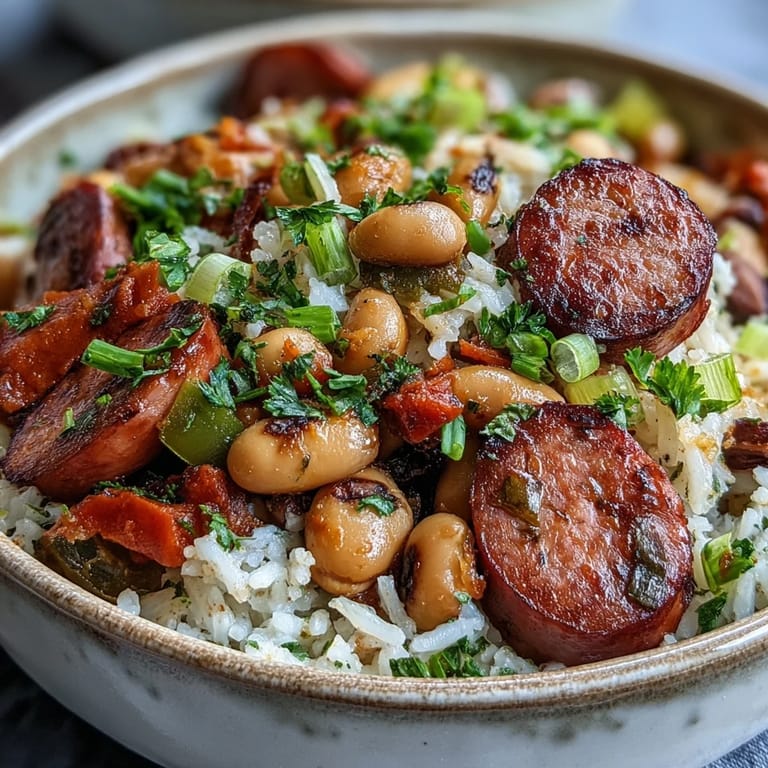
 Save to Pinterest
 There's something about the smell of smoked sausage hitting hot oil that instantly transports me to a humid New Orleans kitchen, even though I was standing in my own apartment on an ordinary Tuesday. My neighbor had just raved about jambalaya at some jazz club, and I was determined to recreate that magic without leaving home. What started as a casual weeknight dinner became the dish I'd make whenever I needed to feel like something bold and alive was happening in my life.
I made this for my sister's potluck last spring, and she actually asked me to bring it again the next month, which had never happened before. Watching people go back for thirds while standing around my kitchen counter made me realize that good food doesn't need to be complicated, it just needs to taste like someone cared while making it.
Ingredients
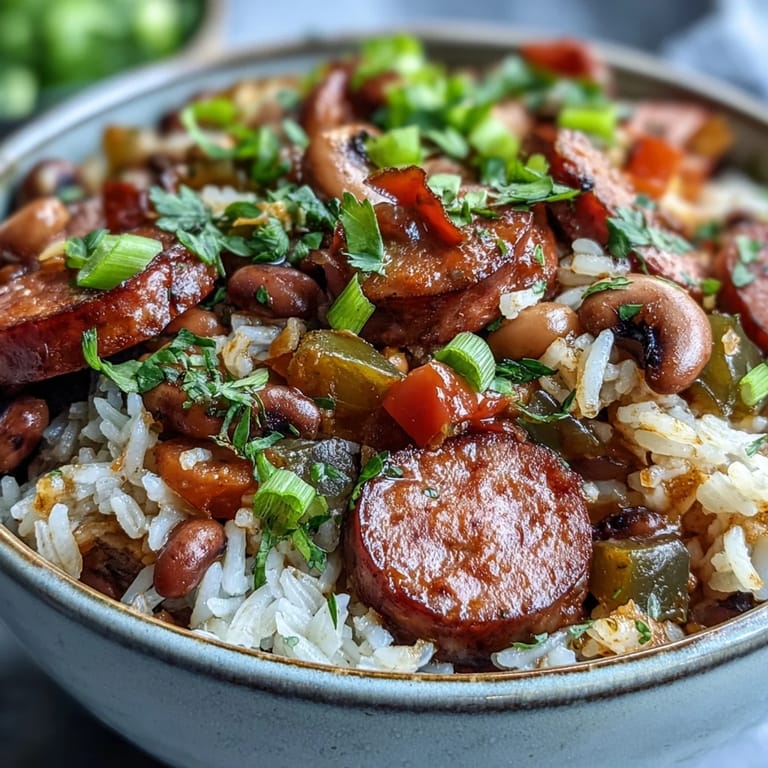
- Smoked sausage (Andouille or kielbasa), 340 g sliced: This is your flavor anchor; the smokiness seeps into every grain of rice, so don't skimp on quality or try to substitute with regular sausage.
- Medium onion, diced: It melts into the base and builds sweetness that balances the spices beautifully.
- Celery stalks, 2 diced: Part of the holy trinity with onion and pepper; it adds an earthy depth most people don't consciously notice but definitely taste.
- Red and green bell peppers, 1 each diced: They stay slightly textured and add color that makes the dish as pretty as it is delicious.
- Garlic, 3 cloves minced: Add it after the softer vegetables so it doesn't burn and turn bitter.
- Black-eyed peas, 1 can drained and rinsed: These beans hold their shape and add protein and earthiness without getting mushy.
- Long-grain white rice, 300 g: It absorbs all the flavors around it; don't use instant rice or you'll miss the whole point.
- Low-sodium chicken broth, 800 ml: The liquid carries all your spices into the rice, so taste it first to avoid over-salting later.
- Diced tomatoes with juices, 1 can: The acidity brightens everything and keeps the dish from feeling one-note.
- Cajun seasoning, 1 ½ tsp: This is where the personality lives; you can dial it up or down depending on your mood and spice tolerance.
- Smoked paprika, 1 tsp: It echoes the sausage and adds a subtle depth that makes people ask what's in here.
- Dried thyme and oregano, ½ tsp each: These herbs whisper in the background rather than shout, creating a rounded flavor.
- Bay leaf, 1: Don't skip it and definitely don't forget to remove it before serving.
- Salt and black pepper to taste: Season conservatively at first since the broth and sausage already bring saltiness.
- Cayenne pepper, ¼ tsp optional: Only add this if you want heat; the dish is satisfying without it.
- Spring onions and fresh parsley for garnish: The fresh brightness at the end reminds you this came from earth and sun, not just spices and heat.
Tired of Takeout? 🥡
Get 10 meals you can make faster than delivery arrives. Seriously.
One email. No spam. Unsubscribe anytime.
Instructions
- Get your pot ready and brown the sausage:
- Heat that olive oil over medium heat in your Dutch oven or heavy pot until you see it shimmer slightly. Slice your sausage and lay it down in the hot oil, listening for that satisfying sizzle; let it brown for 4 to 5 minutes, stirring occasionally so each piece gets color.
- Soften your vegetables in the rendered fat:
- Toss in your onion, celery, and both bell peppers, and cook for about 5 minutes, stirring every minute or so. You're looking for them to lose their rawness and start to smell sweet and toasted, which means they're ready for what comes next.
- Toast the garlic just enough:
- Add your minced garlic and stir constantly for exactly 1 minute; any longer and it turns sharp and bitter, any shorter and you miss the fragrant magic.
- Coat the rice in all those flavors:
- Pour in your rice and keep stirring for about a minute so every grain gets a coating of the oil and vegetable bits. This toasting step keeps the rice from turning mushy later.
- Pour in everything wet and seasoned:
- Add your broth, tomatoes with their juices, drained beans, and all your spices at once, stirring well so nothing settles at the bottom. The mixture should look intentional and aromatic, like something good is definitely about to happen.
- Let it simmer until the rice is tender:
- Bring everything to a boil, then immediately drop the heat to low, cover your pot, and set a timer for 20 to 25 minutes. You'll resist the urge to peek, but trust that the covered pot is doing exactly what it should be.
- Rest and finish with fresh life:
- Turn off the heat and let it sit covered for 5 minutes while the steam finishes softening anything that needs it. Fluff everything gently with a fork, fish out that bay leaf, and finish with the spring onions and parsley scattered across the top.
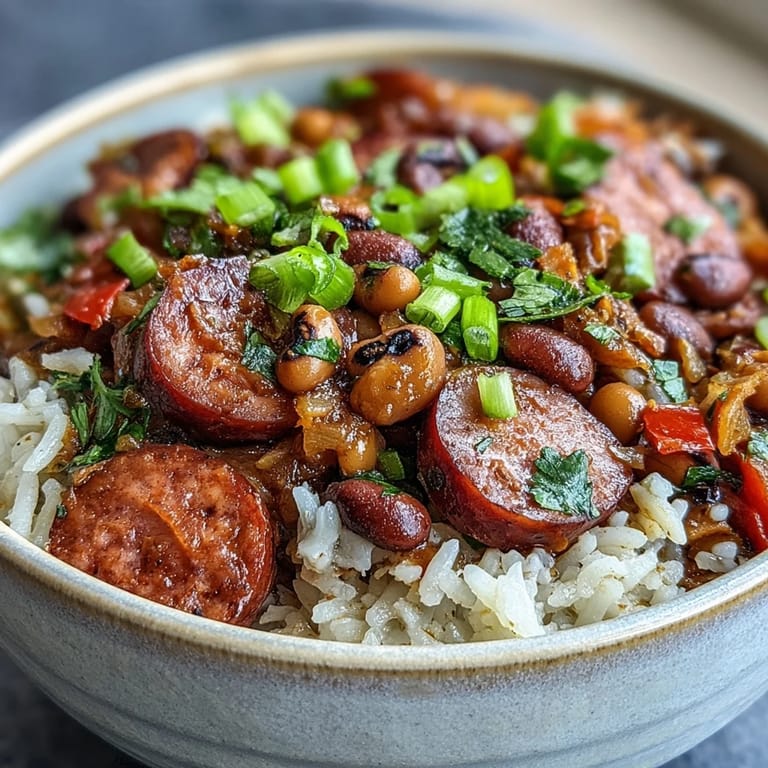 Save to Pinterest
 I learned this dish teaches patience in the best way, because you literally cannot rush it; the cover goes on and you have to trust the process for 25 minutes. That quiet waiting time became something I looked forward to, a small pocket of calm in a chaotic day where I could pour a drink, sit down, and know something delicious was becoming itself without my interference.
Building Flavor Layers
Jambalaya works because it respects the order of things; you brown the sausage first so its oil becomes part of the base, then the vegetables cook in that fat and absorb that smokiness, then the rice toasts and gets ready to drink everything in. Each step builds on the last one, and if you rush through or skip any of it, you end up with a dish that's merely competent instead of genuinely craveable. I've made versions where I threw everything in at once, and the difference is stark enough that I never take shortcuts anymore.
Customizing Without Losing the Soul
The beautiful thing about jambalaya is that it's a canvas that respects your changes if you understand what you're changing. My vegetarian friend swaps the sausage for mushrooms cooked until they're almost crispy and adds extra beans, and it works because mushrooms bring that savory depth that sausage would have brought. The spice level is completely yours to play with; I know people who add three times the cayenne and others who skip it entirely, and both end up with something they love.
Why This Dish Stays in Rotation
It's the kind of meal that feels special enough for a dinner party but practical enough for a Wednesday night when you're tired and hungry. It reheats beautifully, tastes even better the next day when flavors have had time to marry, and genuinely makes your kitchen smell like somewhere important is happening.
- Make extra on purpose so you have leftovers that transform into something new, like tucking it into a tortilla for an unexpected lunch.
- Serve with a bottle of hot sauce on the side so everyone can adjust the heat to their own brave or cautious preference.
- This dish is forgiving about timing; if your rice needs five more minutes or the vegetables are softer than you expected, it all still comes together beautifully.
 Save to Pinterest
 This jambalaya has become the dish I make when I want to feel grounded and alive at the same time, when I want my home to smell like warmth and intention. It's proof that honest cooking doesn't require fanciness, just attention and care.
Recipe Questions & Answers
- → What makes this jambalaya different from traditional versions?
This version incorporates black-eyed peas, adding extra protein and a creamy texture that complements the smoky sausage perfectly. The peas make it more filling while maintaining authentic Cajun flavors.
- → Can I make this vegetarian?
Absolutely. Simply omit the smoked sausage and use vegetable broth instead of chicken broth. Add extra vegetables like mushrooms or additional beans to maintain heartiness and protein content.
- → How spicy is this dish?
The spice level is medium with Cajun seasoning and optional cayenne. You can easily adjust the heat by reducing or increasing the Cajun seasoning and cayenne pepper to suit your taste preferences.
- → Can I use brown rice instead of white?
Brown rice works but requires additional cooking time and liquid. Increase broth by about ½ cup and extend simmering time by 10-15 minutes. The texture will be nuttier and chewier.
- → How should I store leftovers?
Store in an airtight container in the refrigerator for up to 4 days. The flavors continue to develop and meld together. Reheat gently with a splash of water or broth to restore moisture.
- → What type of sausage works best?
Andouille sausage is traditional and adds authentic smoky flavor. Kielbasa makes an excellent substitute with similar texture. Look for smoked sausages with robust spices for the best results.