 Save to Pinterest
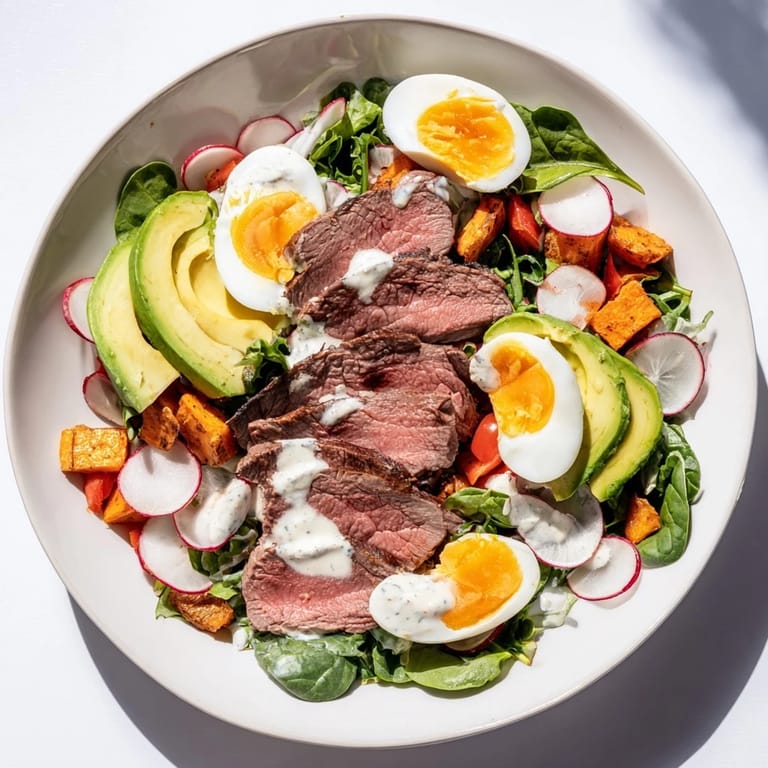
 I discovered this bowl on a Tuesday afternoon when I had leftover roasted sweet potatoes staring at me from the fridge and a craving for something that felt both indulgent and light. The idea came together by accident—I'd seared beef the night before, had half an avocado that needed eating, and realized a runny egg yolk could tie the whole thing together. Now it's become my go-to when I need something that feels special without spending hours in the kitchen.
I made this for a friend who'd been overwhelmed with work, and watching her face light up when she cracked into that jammy yolk felt like a small victory. She actually put her phone down—which never happens—and just sat with the bowl for a minute before eating. That's when I knew this wasn't just lunch; it was the kind of dish that makes people slow down.
Ingredients
- Beef sirloin or flank steak (200 g): The quick-cooking cut that develops a perfect crust when seared hot; I learned to slice it thin against the grain so each piece is tender and easy to eat in a bowl.
- Sweet potato (1 medium, diced): Roasting brings out its natural sweetness and creates little caramelized edges that taste almost like candy; this is the secret to why the bowl feels balanced rather than heavy.
- Ripe avocado (1): The creaminess here isn't just texture—it's what makes the whole thing feel complete, so pick one that yields gently to thumb pressure.
- Mixed salad greens (60 g / 2 cups): I use a mix of spinach and peppery greens because the variety keeps your palate interested throughout the bowl.
- Eggs (2 large): The seven-minute soft boil is everything; you want that yolk jammy enough to bleed into the greens but set enough to hold together.
- Cherry tomatoes (4, halved): Their bright acidity cuts through the richness of the avocado and egg yolk, so don't skip them even if cherry tomatoes feel basic.
- Radishes (2, thinly sliced): These add a sharp, peppery crunch that wakes up each bite; optional but worth keeping around for this reason alone.
- Greek yogurt (1 tbsp): The base of the dressing that keeps everything creamy without weighing it down or requiring mayo.
- Lemon juice (1 tbsp) and Dijon mustard (1 tsp): Together, these create brightness and a subtle tang that ties all the components together without overpowering the dish.
- Honey (1 tsp) and olive oil (2 tbsp total): A touch of honey softens the mustard's bite, and good olive oil matters here because it's one of the few components you taste directly.
Tired of Takeout? 🥡
Get 10 meals you can make faster than delivery arrives. Seriously.
One email. No spam. Unsubscribe anytime.
Instructions
- Prep your vegetables while the oven preheats:
- Peel and dice your sweet potato into rough 1-inch cubes—they don't need to be perfect. Toss them with olive oil, salt, and pepper, then spread on a baking sheet in a single layer so they roast instead of steam.
- Get the sweet potato golden:
- Slide the sheet into a 200°C oven and roast for 20–25 minutes, stirring halfway through. You're looking for edges that are caramelized and dark, not just soft; that's where the flavor hides.
- Sear the beef while waiting:
- Pat your steak dry with paper towels—this is the only step that truly matters for a good crust. Rub it with olive oil, soy sauce, salt, and pepper, then sear it in a screaming-hot grill pan for 2–3 minutes per side, listening for that satisfying sizzle.
- Let the meat rest:
- Remove the beef from heat and let it sit for 5 minutes; this keeps the juices from bleeding out when you slice it. You'll see the difference immediately.
- Soft boil your eggs gently:
- Bring water to a simmer in a small saucepan, gently lower in your eggs, and set a timer for exactly seven minutes. The yolk should be barely set but still soft in the center—it's the sweet spot.
- Cool the eggs in ice water:
- The moment time's up, transfer them to a bowl of cold water and let them sit while you finish everything else. The cold water stops the cooking, so you get that jammy yolk every time.
- Whisk the dressing together:
- In a small bowl, combine Greek yogurt, lemon juice, Dijon mustard, honey, salt, and pepper. The mixture should taste bright and sharp, with just enough sweetness to round out the mustard.
- Assemble with intention:
- Divide greens between two bowls, then arrange all your components on top—think of it like a painter setting colors rather than just throwing things on. Start with the warm roasted potato, add avocado next to it, then the beef, and finally crown it with the halved egg.
- Finish and serve right away:
- Drizzle the dressing over everything and serve immediately while the sweet potato is still warm and the egg yolk is ready to melt into everything else. This moment—right now—is when it's perfect.
 Save to Pinterest
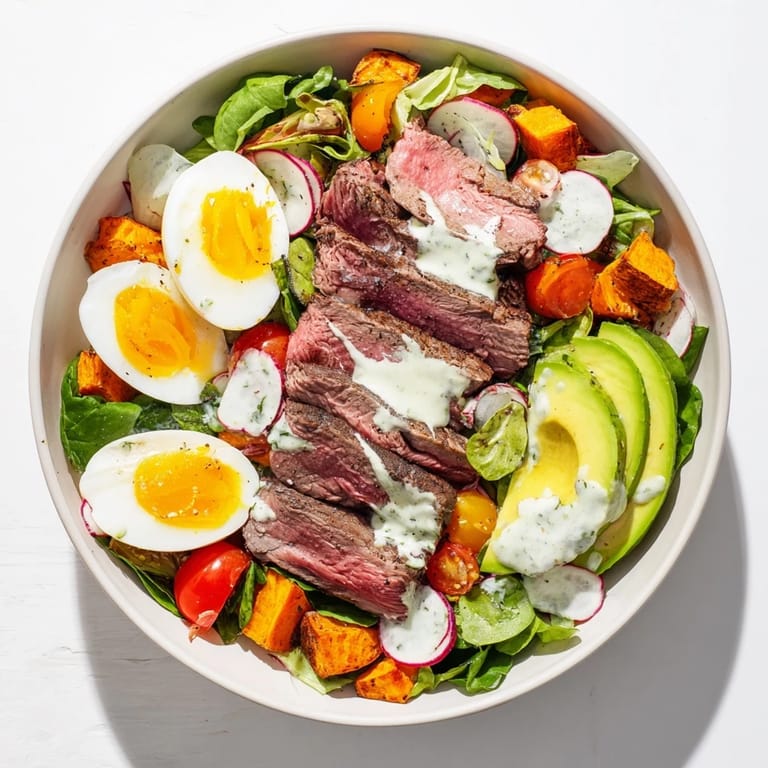
 There's a quiet moment when everything comes together—the warm sweet potato still steaming, the cool avocado, the egg yolk catching light—where you realize this bowl is more than nutrition. It's the kind of meal that makes a regular day feel a little bit more intentional.
Why Temperature Contrast Matters
The magic of this bowl lives in the temperature play between warm roasted vegetables and beef against the cool greens and creamy avocado. When that warm yolk breaks and mingles with the cool spinach, your palate stays engaged in a way that a flat-temperature meal never achieves. I learned this the hard way by trying to prep everything ahead and serve it cold—it tasted fine, but it lost something essential. Now I time it so the sweet potato comes out of the oven just as I'm finishing the dressing, and the whole eating experience feels alive.
Building Your Bowl Based on What You Have
This bowl is flexible in the best way because it started as a solution to random leftovers. Swap the beef for grilled chicken breast if you want something leaner, or use tofu if you're cooking plant-based—the roasting and seasoning techniques stay exactly the same. I've added cooked quinoa or brown rice on nights when I needed extra carbohydrates and calories, and it never feels like a compromise; it feels like customizing the meal for what my body needed that day. The greens are your base, the egg is your binder, and everything else is an improvisation waiting to happen.
Bringing Texture Into Every Bite
A bowl without crunch starts feeling flat halfway through, so I've learned to always include at least one crunchy element—radishes, toasted seeds, nuts, even a handful of toasted breadcrumbs if I'm feeling it. The moment your teeth hit something crispy, the whole eating experience shifts and you forget you're eating something healthy. It's texture that turns a well-balanced meal into something you actually look forward to eating again.
- Toast your own seeds and nuts in a dry pan for two minutes to amplify their flavor instead of using raw versions.
- Slice radishes as thin as you can manage; the thinner they are, the more delicate their bite becomes.
- If you add crunch, add it just before serving so it doesn't get soggy from the dressing.
 Save to Pinterest
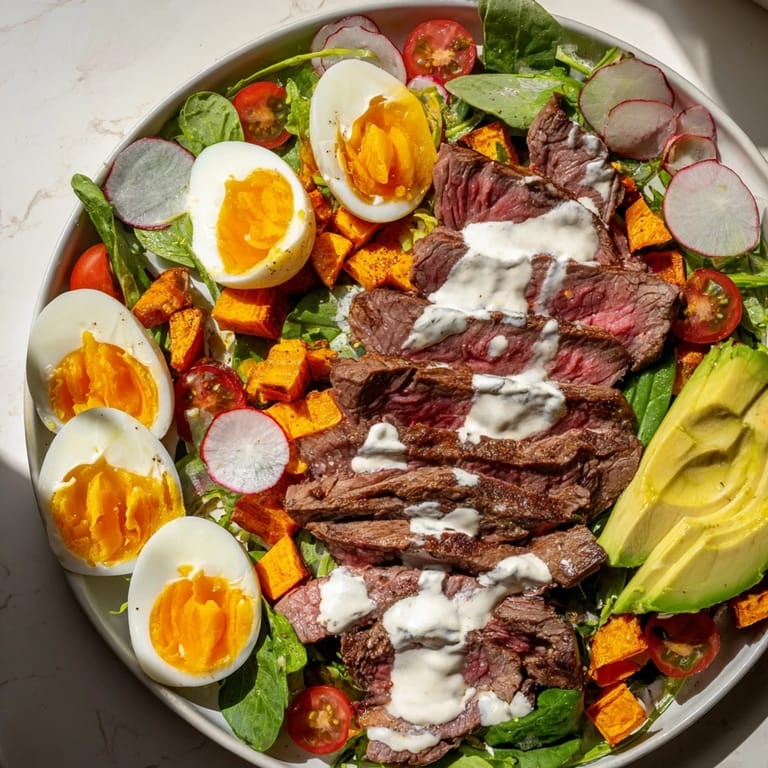
 This bowl has become my answer to the question: what do I eat when I want to feel nourished and satisfied without feeling like I'm on a diet? It's honest food that tastes like care, and somehow it works every single time.
Recipe Questions & Answers
- → How do I achieve medium-rare beef in this bowl?
Sear the beef for 2–3 minutes per side on medium-high heat, then allow it to rest before slicing to retain juices and tenderness.
- → What’s the best way to get creamy avocado slices?
Use a ripe avocado that yields slightly to gentle pressure. Slice just before assembling to keep texture fresh.
- → Can I prepare the sweet potato in advance?
Yes, roast the diced sweet potato ahead of time and gently rewarm before assembling the bowl to maintain softness.
- → How should the eggs be cooked for ideal texture?
Simmer eggs for 7 minutes for jammy yolks. Adjust cooking time if firmer or runnier yolks are preferred.
- → What dressing complements these ingredients best?
A dressing combining Greek yogurt, lemon juice, Dijon mustard, and honey offers a tangy balance that enhances the flavors without overpowering.
- → Are there suitable substitutions for dietary preferences?
Yes, beef can be replaced with grilled chicken or tofu; gluten-free soy sauce ensures it remains suitable for gluten sensitivities.