 Save to Pinterest
 There's something almost magical about transforming something as simple as stale bread and garlic into a soup that tastes like pure comfort. I discovered this recipe on a gray November afternoon when I had half a loaf of sourdough going stale and absolutely nothing else that seemed appealing in the pantry. What started as improvisation—tossing bread into a pot with caramelized garlic and butter—became a soup so velvety and rich that I've made it dozens of times since. The magic is in how the bread dissolves into the broth, creating a natural creaminess without pretense, and how every spoonful tastes like garlic bread itself decided to become something warm you could actually sip.
I'll never forget making this for my neighbor who showed up unannounced one evening with a bottle of wine and the kind of tired that comes from a long day. I had this soup simmering in about 20 minutes, and watching her face light up as she tasted it—that moment when someone realizes they're about to have something really good—made me understand why comfort food matters so much. She came back three days later asking if I could teach her how I made it, and now it's become our go-to when we need to feel taken care of.
Ingredients
- Day-old rustic bread (about 4 cups cubed): Use sourdough or a substantial country loaf—day-old bread absorbs flavors better and breaks down into creaminess rather than becoming a mushy pulp, and the slight tang of sourdough adds depth.
- Unsalted butter (2 tbsp): This is where richness starts; it carries the garlic aroma and browns slightly to deepen the flavor profile.
- Olive oil (2 tbsp): Keeps the aromatics from sticking and adds a gentle fruity undertone that rounds out the garlic.
- Garlic cloves (6 large, minced): This is the hero—mincing rather than slicing means it dissolves completely into the soup and creates a garlicky base without bite.
- Yellow onion (1 medium, finely chopped): Adds sweetness and body; finely chopping helps it disappear into the silkiness.
- Celery (1 stalk, finely chopped): A quiet ingredient that adds earthiness and helps build a soup base without announcing itself.
- Fresh thyme (1 sprig or 1/2 tsp dried): The herbs tie everything to garlic bread territory; remove the sprig before blending or you'll have tiny herb bits floating around.
- Fresh parsley (2 tbsp, chopped): Brightens the finished soup and prevents it from feeling too heavy, plus it looks intentional as a garnish.
- Vegetable broth (4 cups): The blank canvas; use something with gentle seasoning since this soup lets every other ingredient shine.
- Heavy cream (1 cup): Added at the end to create richness and silky mouthfeel without making the soup feel heavy or one-note.
- Parmesan cheese (1 cup grated): Adds umami and a subtle sharpness that prevents the soup from becoming one-dimensional; grate it fresh if you can.
- Salt and black pepper (to taste): Adjust these at the very end because broth and Parmesan are already salty, and you might need less than you think.
Tired of Takeout? 🥡
Get 10 meals you can make faster than delivery arrives. Seriously.
One email. No spam. Unsubscribe anytime.
Instructions
- Start the aromatics—this is your flavor foundation:
- Heat the olive oil and butter together over medium heat until the butter is foaming gently. Add the chopped onion and celery with a pinch of salt, stirring occasionally until they're soft and translucent, which takes about 5 minutes. The salt draws out their moisture and helps them soften faster.
- Build the garlic depth:
- Stir in the minced garlic and thyme sprig, and keep stirring for about 2 minutes until the kitchen fills with a toasted garlic smell. Don't walk away—garlic burns in a heartbeat and tastes bitter when it does, so stay with it and let it just turn golden at the edges.
- Toast the bread like you mean it:
- Add all the bread cubes and stir them around for 3 to 4 minutes, coating every piece with the buttery, garlicky oil. You'll feel the bread absorbing everything and hear it starting to make a softer, more cohesive sound as you stir instead of that dry rustling of bread crumbs.
- Bring it together with liquid:
- Pour in the vegetable broth slowly, stirring as you go so the bread doesn't clump up. Let it come to a boil, then reduce the heat and let it simmer gently with the lid on for about 15 minutes, stirring occasionally, until the bread has mostly dissolved and the broth looks unified instead of separated.
- Blend into silkiness:
- Fish out the thyme sprig with a fork, then use an immersion blender to puree everything until it's completely smooth and creamy. If you don't have an immersion blender, carefully transfer it to a regular blender in batches and blend until completely smooth, then pour it back into the pot.
- Finish with dairy and cheese:
- Stir in the heavy cream and grated Parmesan over low heat, letting it simmer gently for 3 to 4 minutes until the cheese melts completely and the soup becomes even thicker and silkier. Taste it now and add salt and pepper until it tastes like the best thing you've ever made.
- Serve it warm with intention:
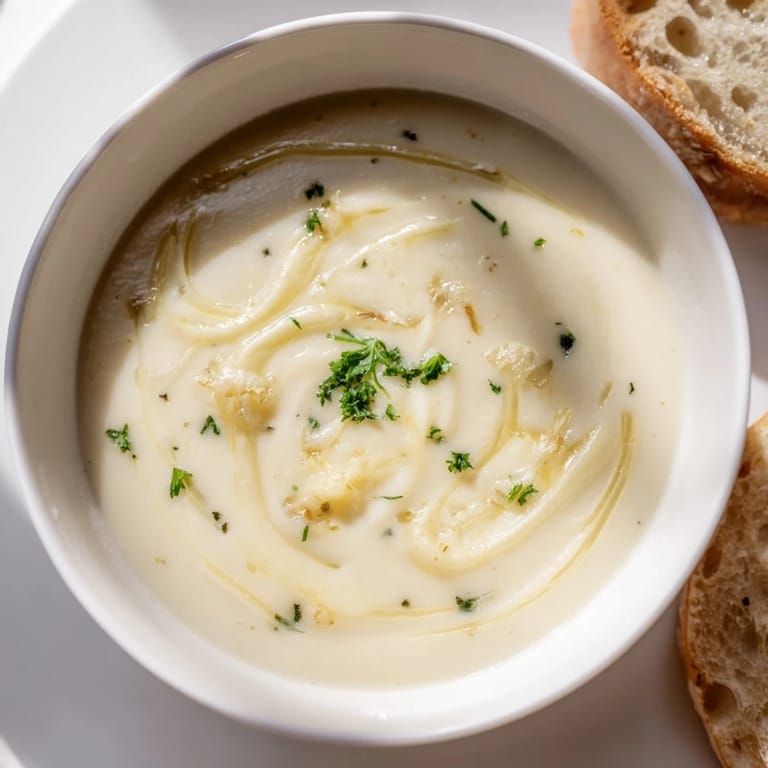
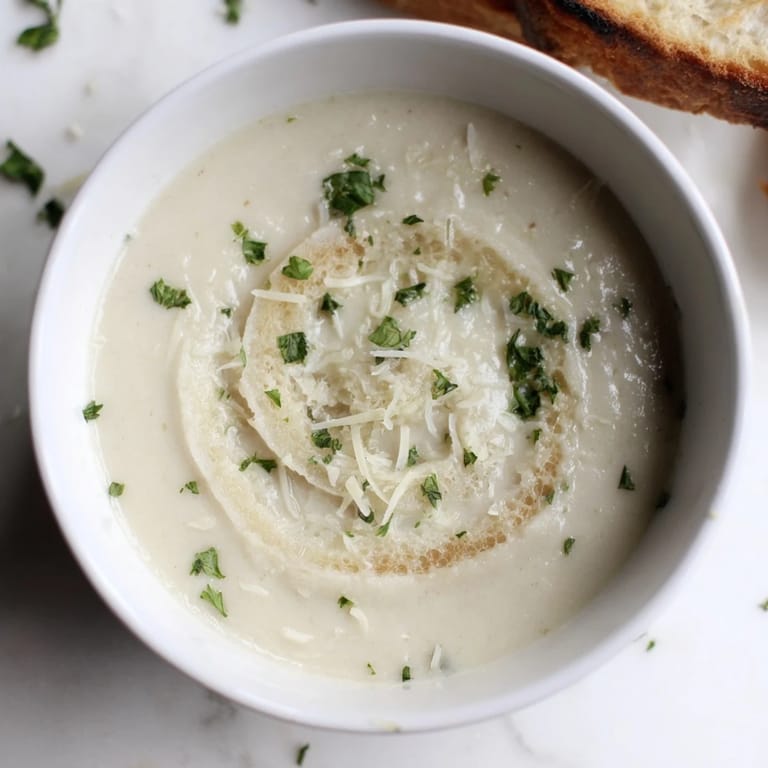
- Ladle into bowls, finish with chopped fresh parsley and a little extra Parmesan on top, and watch someone's eyes light up when they taste it.
 Save to Pinterest
 This soup became my answer to the question nobody asked but everyone needed—something that tastes restaurant-quality but requires only what's usually sitting in your kitchen. It's taught me that sometimes the best dishes come from constraints, and that the simplest ingredients, handled with care and patience, can become something unexpectedly elegant.
Why This Soup Works So Well
The genius of this recipe is that bread becomes the thickener instead of cream or flour doing the heavy lifting, which means you get a naturally velvety texture that tastes nothing like what you'd expect from pulverized bread. The garlic and butter combination creates a flavor base so developed that you don't need complicated seasoning or layering of multiple aromatics to make it taste sophisticated. Every element in this soup is also practical—nothing exotic, nothing that will sit unused in your fridge, which is exactly why it ends up on your table more often than other recipes.
The Art of Building Garlic Flavor
I learned early that how you handle garlic in this soup matters more than the quantity; toasting it slightly in butter draws out sweetness instead of harshness, and then letting it dissolve completely into the broth means every spoonful tastes evenly garlicky instead of having chunks. The mincing is important too—minced garlic distributes throughout the cooking liquid and blends invisibly, whereas sliced garlic would still be visible and chunky even after blending. This is also why you add the parsley at the end rather than at the beginning; those fresh green flecks brighten everything and remind you this is a refined bowl of soup, not heavy or dated.
Variations and Personal Touches
The recipe as written is perfect, but I've learned that small additions make it feel like yours rather than someone else's formula. Red pepper flakes scattered on top add a whisper of heat that nobody expects in a creamy soup, and crispy croutons fried in garlic oil add a textural contrast that keeps it from feeling too smooth and one-textured. Some evenings I add a splash of white wine after the garlic toasts, or a tiny pinch of nutmeg stirred in with the cream, which sounds strange until you taste how it rounds out the flavor and makes everything taste more sophisticated without announcing itself.
- For a lighter version, use half cream and half whole milk, which still tastes rich but sits easier.
- A drizzle of good garlic-infused oil or truffle oil on top transforms it from weeknight comfort to something you'd serve guests.
- If you have vegetable scraps like carrot peelings or onion skin, simmer them in the broth beforehand for deeper flavor.
 Save to Pinterest
 This soup is proof that the best meals don't require special ingredients or hours in the kitchen—just attention, care, and the willingness to trust that simple things, done well, become something worth remembering. Make it on an evening when you need something that tastes like it was made with intention, and watch it become someone's favorite.