 Save to Pinterest
 There's something about the smell of caramelizing onions that pulls me back to a rainy October afternoon when I decided to stop overthinking dinner and just start chopping vegetables. This stew happened almost by accident—I had sweet potatoes going soft in my pantry, a can of chickpeas I'd been meaning to use, and the kind of mood that needed something warm and uncomplicated. What emerged from that pot was so genuinely nourishing that it's become my go-to when the weather turns or when I need to feel grounded again.
I made this for a friend going through a rough patch, and they ate two bowls while we sat at my kitchen counter talking about nothing in particular. They came back the next week asking for the recipe, which meant more to me than any compliment ever could. That's when I knew this stew was more than sustenance; it was the kind of food that says "I'm here, and you're okay."
Ingredients
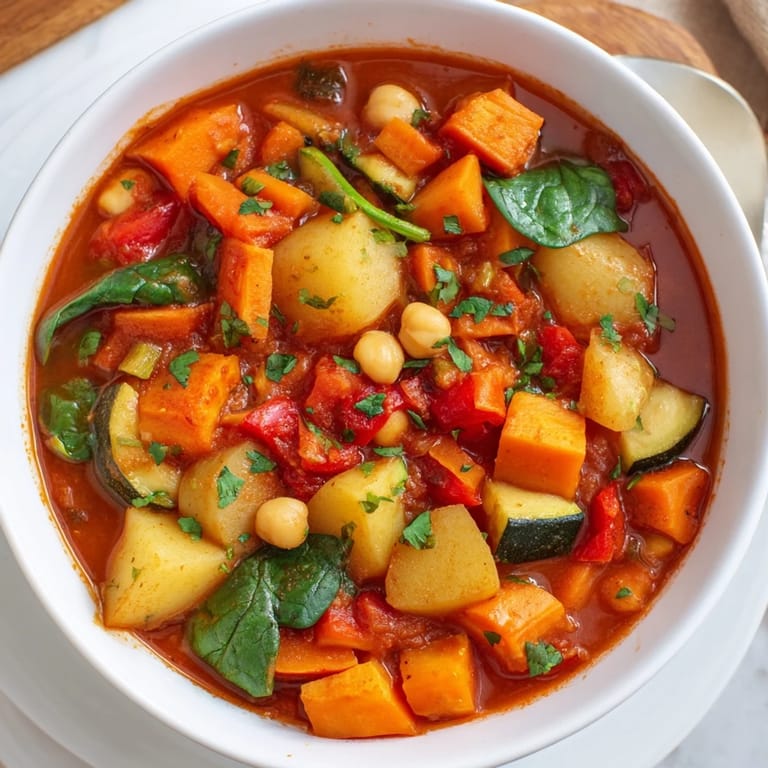
- Sweet potatoes: They're the heart of this stew—their natural sweetness balances the earthiness of the other vegetables and makes the broth taste almost caramelized without any added sugar.
- Yukon Gold or russet potatoes: These add body and substance; Yukon Gold stays creamier, while russet breaks down slightly to thicken the broth.
- Carrots, celery, and onion: This aromatic base is your foundation—don't skip the sautéing step, it coaxes out their sweetness.
- Red bell pepper: Adds a bright note and subtle sweetness that rounds out the heavier root vegetables.
- Cannellini and chickpeas: Protein and creaminess in every spoonful; I use both because the mix of textures feels more complete.
- Diced tomatoes and tomato paste: The acid cuts through richness and deepens the savory profile—don't use crushed, the texture matters.
- Smoked paprika, cumin, and thyme: These three create a warm, almost earthy backbone; the smoke is what makes people ask what you did differently.
- Olive oil: Use something you actually like the taste of, not the cheapest bottle—it matters in this simple preparation.
Tired of Takeout? 🥡
Get 10 meals you can make faster than delivery arrives. Seriously.
One email. No spam. Unsubscribe anytime.
Instructions
- Build your aromatic base:
- Heat olive oil in a large pot over medium heat and add diced onion, celery, and carrot. Sauté for about 5 minutes, stirring occasionally, until the onions turn translucent and the kitchen smells like comfort. You'll notice the vegetables release their juices—that's exactly what you want.
- Add brightness and depth:
- Stir in minced garlic, red bell pepper, and zucchini, then cook for 3 more minutes. The garlic will become fragrant almost immediately, and that's your signal to move forward.
- Toast the spices:
- Add the diced sweet potatoes, regular potatoes, smoked paprika, thyme, cumin, black pepper, and salt. Stir constantly for about 2 minutes—this releases the oils in the spices and prevents them from tasting raw or harsh. Your nose will tell you when it's ready.
- Build the broth:
- Stir in tomato paste first, coating everything evenly, then add the diced tomatoes with their juice and the vegetable broth. Drop in the bay leaf and bring everything to a rolling boil—this usually takes 5–7 minutes.
- Simmer low and slow:
- Reduce heat to low, cover the pot, and let it bubble gently for 20 minutes until the potatoes are fork-tender but not falling apart. Peek under the lid occasionally—you're looking for a steady, quiet simmer, not an aggressive boil.
- Unite the proteins:
- Add the drained cannellini beans and chickpeas, then continue simmering uncovered for 10–15 minutes. This is when the magic happens; the vegetables soften completely and their flavors start speaking to one another.
- Finish with greens:
- If using spinach, stir it in now and cook for just 2 minutes until silky. Taste everything, adjust salt and pepper to your preference, and remove the bay leaf.
- Serve with intention:
- Ladle into bowls and finish with fresh parsley and a lemon wedge if you have them. The lemon brightens everything in the most understated way.
 Save to Pinterest
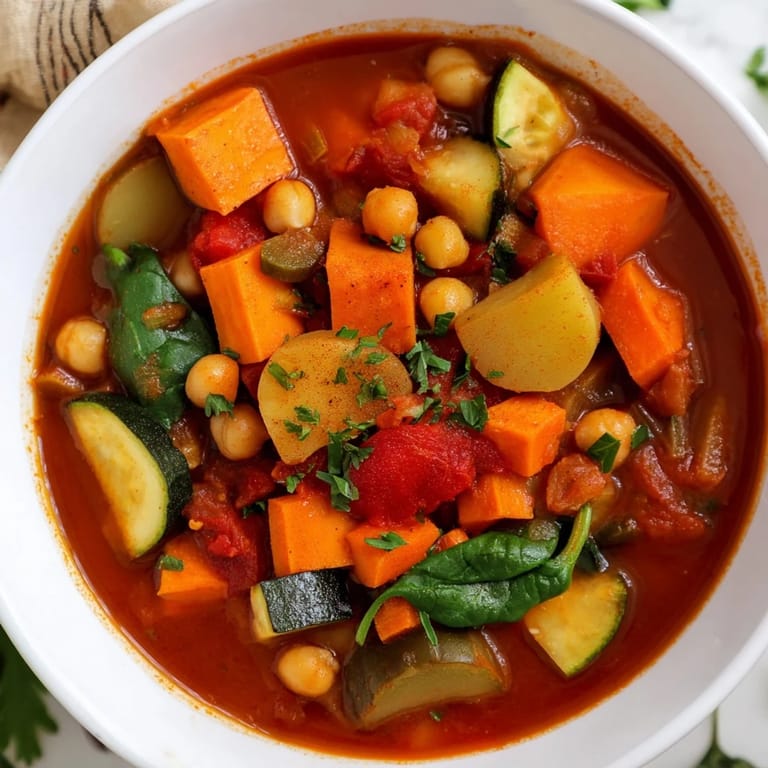
 There's a moment when all the elements of this stew finally understand each other—usually around minute 35 of cooking—where it stops tasting like separate ingredients and becomes something whole. That convergence is what keeps me coming back to this recipe, season after season.
Customizing Your Stew
This recipe is more of a template than a rigid formula. Swap the beans for green lentils if you prefer a firmer texture, or use whatever seasonal vegetables are in your farmer's market—kale instead of spinach, mushrooms alongside the zucchini, diced eggplant in place of some potatoes. I once added roasted chickpeas on top for crunch and never looked back. The broth is forgiving enough to accommodate what you have, so trust your instincts.
Serving and Pairing Ideas
This stew stands alone in a bowl but becomes something almost transcendent with crusty bread on the side for soaking up every last drop of broth. It's equally at home over a bed of rice or alongside a simple green salad for those nights when you want vegetables both in the bowl and on the plate. Some people drizzle hot sauce over theirs; I'm a lemon wedge person, but the stew doesn't judge either preference.
Storage and Meal Prep
This stew was designed to be made and then forgotten about for a few days—it tastes better reheated, as if the flavors need time to fully integrate. Store it in an airtight container in the refrigerator for up to 5 days, or freeze it in portions for up to 3 months. I prefer freezing it in the amount I'd typically eat for one lunch, so there's no thawing the whole batch when hunger strikes unexpectedly.
- The stew thickens as it sits, so you may need to add a splash of broth or water when reheating.
- Fresh parsley and lemon should be added right before eating, not ahead of time.
- For meal prep, portion it while still warm so it cools evenly in containers.
 Save to Pinterest
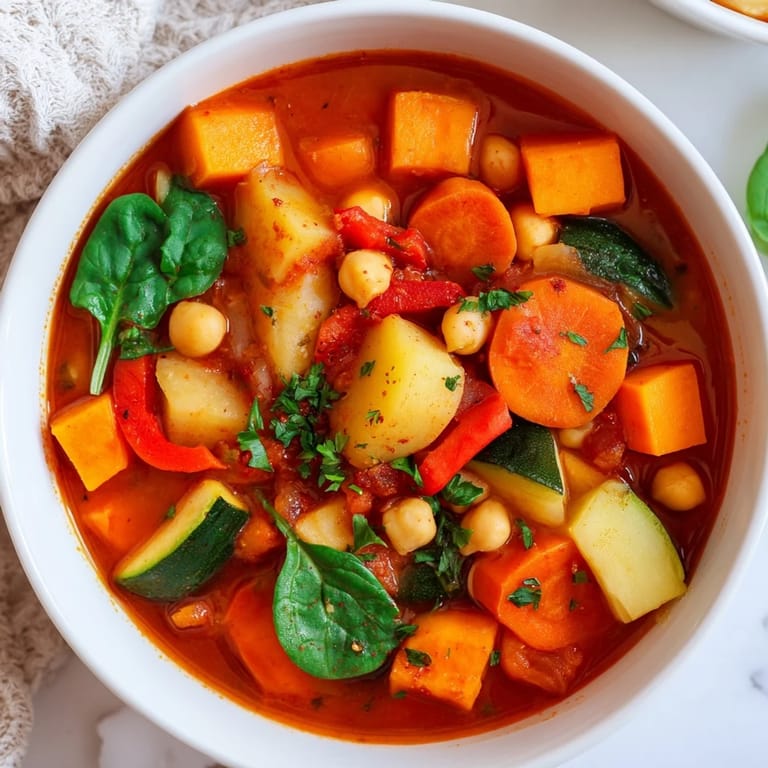
 This is the kind of stew that asks nothing of you but gives everything in return—warmth, nourishment, and the quiet satisfaction of something well-made. Make it for yourself on a Tuesday when you need grounding, or make it for someone else and watch it become part of their comfort rotation too.
Recipe Questions & Answers
- → Can I substitute the beans in this stew?
Yes, lentils or other legumes can be used as alternatives to cannellini, kidney beans, or chickpeas for varied textures and flavors.
- → What kind of potatoes work best?
Sweet potatoes and Yukon Gold or russet potatoes are recommended for their complementary textures and flavors.
- → How can I add more spice to this dish?
Adding ½ teaspoon of chili flakes while cooking will introduce a subtle heat without overpowering the robust flavors.
- → Is it necessary to add baby spinach?
Baby spinach is optional but adds color and a mild, fresh flavor; it wilts quickly when stirred in at the end.
- → What is the best way to serve this stew?
Serve it hot, garnished with fresh parsley and lemon wedges. It pairs well with crusty bread or over rice for a complete meal.
- → Can I prepare this stew ahead of time?
Yes, the stew tastes even better the next day as flavors meld. Store it refrigerated and reheat gently before serving.