 Save to Pinterest
 The smell of roasted peppers wafting from the oven always pulls me back into the kitchen, even when I'm trying to sneak away to check my phone. I started making this pasta on a Tuesday night when my fridge was a chaotic mix of half-used vegetables and good intentions. What began as a clean-out-the-crisper experiment turned into something I now crave on repeat. The way the garlic hits the hot oil, that quick sizzle before everything comes together, it's one of those sounds that means dinner is about to get good. I've made it for myself, for friends who dropped by unannounced, and for nights when I needed something bright and satisfying without the fuss.
I remember serving this to a friend who claimed she didn't like zucchini. She picked at it cautiously at first, then went back for seconds without saying a word. Later she admitted that roasting them changed everything, that they tasted nothing like the sad steamed version she remembered from childhood. That night taught me that how you cook something matters just as much as what you cook. Now I make extra vegetables on purpose because the leftovers are perfect tucked into an omelet the next morning.
Ingredients
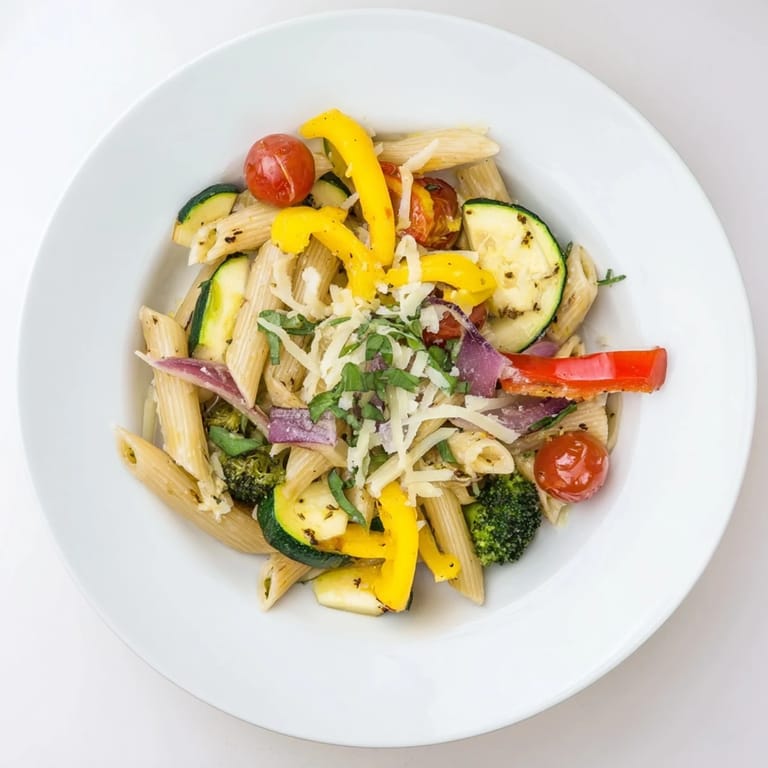
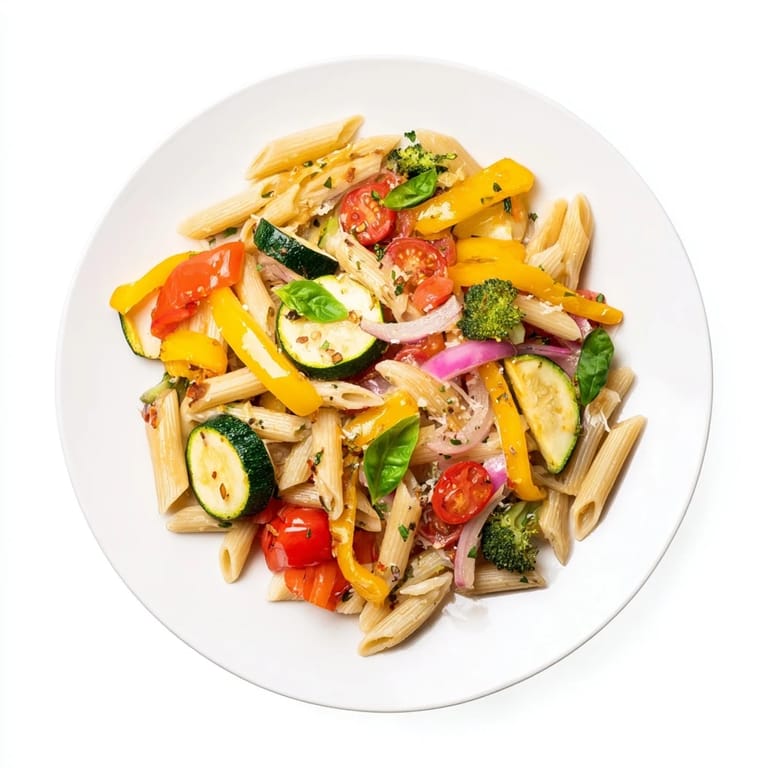
- Penne or fusilli pasta: The ridges and shapes catch all the garlicky oil and little bits of roasted vegetable, making every forkful satisfying.
- Zucchini and yellow squash: They roast up tender with golden edges, adding a mild sweetness that balances the sharper flavors.
- Red and yellow bell peppers: Roasting concentrates their natural sugars and gives them a soft, almost jammy texture that melts into the pasta.
- Red onion: It gets sweet and slightly charred in the oven, adding a gentle bite without overpowering the dish.
- Cherry tomatoes: They burst in the heat and release their juices, creating little pockets of bright, tangy flavor.
- Broccoli florets: Roasting makes them crispy on the edges and tender inside, nothing like the mushy boiled version.
- Extra virgin olive oil: Use a good one here because it coats everything and carries the garlic and herbs through every bite.
- Garlic: Fresh minced garlic sautéed just until fragrant is the backbone of the whole dish, so don't skip or rush this step.
- Italian herbs: A blend of oregano, basil, and thyme gives that classic Italian warmth without needing a dozen separate jars.
- Parmesan cheese: Freshly grated melts right into the hot pasta and adds a nutty, salty finish that ties everything together.
- Fresh basil or parsley: A handful of chopped herbs at the end brightens the whole dish and makes it taste like spring, no matter the season.
- Lemon wedges: Optional, but a squeeze of lemon juice right before serving wakes up all the flavors and adds a little zing.
Tired of Takeout? 🥡
Get 10 meals you can make faster than delivery arrives. Seriously.
One email. No spam. Unsubscribe anytime.
Instructions
- Prep the oven and vegetables:
- Preheat your oven to 220°C (425°F) and line a large baking sheet with parchment paper. Spread all your sliced and chopped vegetables in a single layer, drizzle with 2 tablespoons of olive oil, and season with Italian herbs, salt, and pepper, tossing everything until it's evenly coated.
- Roast until golden:
- Slide the tray into the oven and roast for 18 to 20 minutes, giving everything a good stir halfway through so the edges get nicely browned and the vegetables turn tender. The smell alone will make you hungry.
- Cook the pasta:
- While the vegetables roast, bring a large pot of salted water to a rolling boil and cook your pasta until it's al dente, just like the package says. Before you drain it, scoop out half a cup of that starchy pasta water and set it aside.
- Sauté the garlic:
- In a large skillet over medium heat, warm the remaining tablespoon of olive oil and toss in the minced garlic, stirring for about 30 seconds until it smells amazing but hasn't turned brown. Garlic burns fast, so keep your eye on it.
- Toss everything together:
- Add the roasted vegetables and drained pasta to the skillet, tossing gently and adding a splash of that reserved pasta water to help everything come together in a silky, cohesive way. The starch in the water works like magic.
- Finish and taste:
- Pull the skillet off the heat and stir in half the Parmesan and most of the fresh herbs, then taste and adjust the seasoning if it needs more salt or pepper. This is your chance to make it exactly how you like it.
- Serve it up:
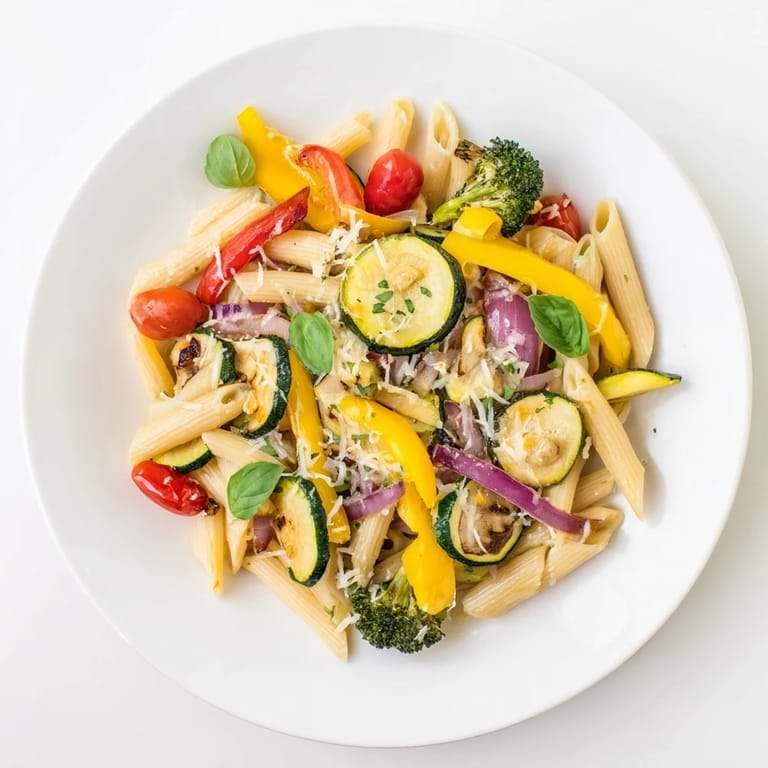
- Plate the pasta immediately, topping each serving with the remaining Parmesan, a sprinkle of fresh herbs, and a squeeze of lemon juice if you want that extra brightness. It's best enjoyed right away while everything is warm and glossy.
 Save to Pinterest
 One evening I made this for a small dinner party and someone asked if I'd been to culinary school. I laughed and told them it was just vegetables, pasta, and paying attention to the oven timer. But that compliment stuck with me because it reminded me that simple food, cooked with care, can feel generous and impressive without any tricks. This dish has become my go-to when I want to feed people something that feels like a gift without spending all day in the kitchen.
Making It Your Own
The beauty of this recipe is that it bends to whatever you have on hand or whatever the season offers. In spring I swap in asparagus and snap peas, and in the fall I'll add cubed butternut squash or mushrooms. Sometimes I toss in a can of drained chickpeas for extra protein, or I'll sauté some shrimp in the garlic oil before adding the vegetables. If you're not a fan of Parmesan, a crumble of goat cheese or a handful of toasted pine nuts works just as well. The formula stays the same, but the dish never gets boring.
What to Serve Alongside
This pasta is hearty enough to stand on its own, but I love pairing it with a simple green salad dressed in lemon and olive oil to keep things light. A slice of crusty bread for mopping up any garlicky oil left on the plate is never a bad idea. If you want to make it feel a little fancier, pour a glass of chilled Pinot Grigio or Sauvignon Blanc, something crisp that won't compete with the vegetables. On nights when I'm extra hungry, I'll start with a bowl of minestrone, but honestly, the pasta is satisfying enough that you won't feel like you're missing anything.
Storing and Reheating
Leftovers keep well in an airtight container in the fridge for up to three days, though the pasta will soak up some of the oil as it sits. When I reheat it, I add a splash of water or a drizzle of olive oil in a skillet over medium heat, tossing gently until everything warms through. The microwave works in a pinch, but the stovetop brings back that fresh-cooked feel. I've even eaten it cold straight from the fridge as a quick lunch, and it still tastes good, just different.
- Store in an airtight container and refrigerate within two hours of cooking.
- Reheat gently on the stovetop with a little water or olive oil to revive the texture.
- If you're meal prepping, consider storing the vegetables and pasta separately so nothing gets too soggy.
 Save to Pinterest
 This is the kind of recipe that makes you feel capable and calm in the kitchen, no drama, no complicated techniques, just good ingredients treated well. I hope it becomes one of those meals you reach for when you want something nourishing and bright, the kind that makes any evening feel a little more special.
Recipe Questions & Answers
- → Can I prepare the vegetables ahead of time?
Yes, you can chop all vegetables several hours in advance and store them in an airtight container in the refrigerator. Roast just before serving for optimal texture and flavor.
- → What's the best pasta shape for this dish?
Penne and fusilli work wonderfully because their grooves and curves capture the roasted vegetables and sauce. Farfalle or rigatoni are also excellent choices that hold the vegetables well.
- → How do I achieve perfect al dente pasta?
Cook pasta one minute less than package directions suggest. The residual heat while tossing will complete the cooking. Taste a strand—it should have slight firmness in the center.
- → Can I make this dish dairy-free?
Absolutely. Simply omit the Parmesan or substitute with dairy-free alternatives available at most grocery stores. The dish remains flavorful with olive oil, garlic, and herbs as the primary seasonings.
- → What vegetables work best for roasting in this preparation?
Zucchini, bell peppers, broccoli, and cherry tomatoes are ideal. You can also use asparagus, snap peas, mushrooms, eggplant, or green beans depending on season and preference. Aim for similar-sized pieces for even cooking.
- → How should I store and reheat leftovers?
Store in an airtight container for up to three days. Reheat gently on the stovetop over low heat with a splash of olive oil or pasta water to restore moisture. Avoid the microwave, which can dry out the vegetables.