 Save to Pinterest
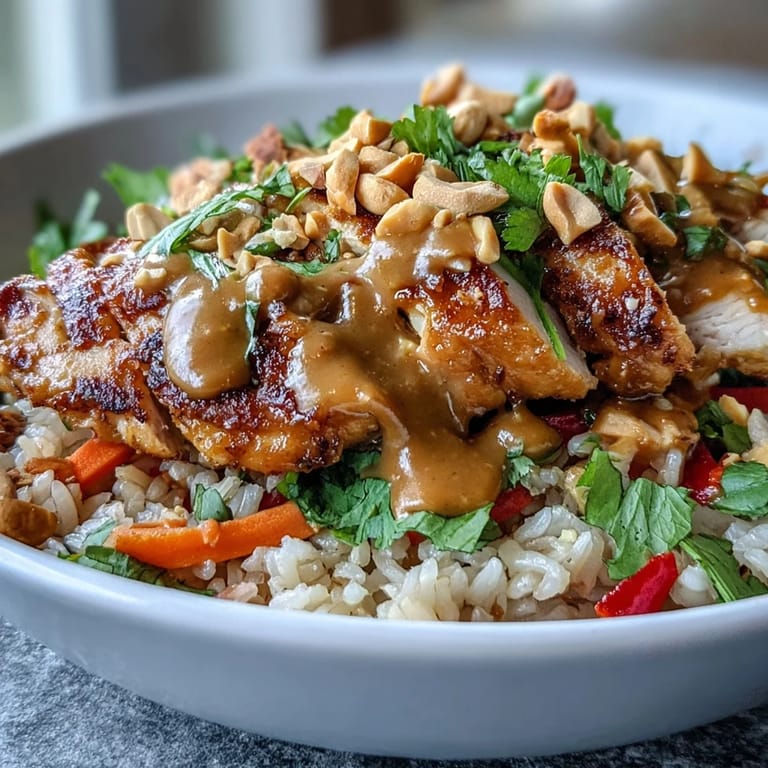
 There's something about assembling a bowl that feels less like cooking and more like creating—each component waiting for its moment, colors stacking up like edible art. I discovered this peanut chicken power bowl during one of those weeks when my schedule was chaos, but my body was demanding real food, not takeout shortcuts. The magic happened when I drizzled that warm peanut sauce over everything and suddenly understood why bowls had become everyone's favorite way to eat. It's not just nourishing; it's the kind of meal that makes you feel good while you're eating it.
I made this for my partner on a Tuesday when they'd had an absolutely brutal day, and watching their expression shift from tired to genuinely satisfied after that first bite felt like small magic. The combination of warm grain, tender chicken, cool fresh vegetables, and that creamy peanut sauce somehow hit every emotional note I was aiming for. That's when I realized this bowl isn't just nutritious—it's genuine comfort food that happens to be packed with protein and vegetables.
Ingredients
- Boneless, skinless chicken breasts or thighs (500 g): Thighs stay more forgiving if you're not hovering over the oven, but breasts are leaner if that matters to you—I learned to pat them dry before seasoning so the spices actually stick.
- Olive oil (1 tbsp): This thin coating keeps the chicken from drying out, so don't skip it even though it seems minimal.
- Smoked paprika, garlic powder, cumin (1 tsp, 1 tsp, ½ tsp): These three create that warm, savory backbone—ground cumin especially adds a subtle earthiness that elevates simple chicken.
- Brown rice or quinoa (200 g uncooked): Brown rice takes longer but has a nuttier flavor, while quinoa cooks faster and adds a different texture—pick based on your mood and timeline.
- Carrot, red bell pepper, cucumber, purple cabbage (varied amounts): The variety of colors isn't just pretty; each vegetable brings different nutrients and textures that keep every bite interesting.
- Creamy peanut butter (80 g): Use the unsweetened kind if you can find it, otherwise the sauce stays balanced without adding extra sugar.
- Soy sauce, rice vinegar, honey (2 tbsp, 1 tbsp, 1 tbsp): This trio creates the sauce's savory-tangy-sweet balance—mess with the proportions and the whole thing tastes off, so measure carefully.
- Sriracha (1 tsp optional): I add it for the heat and slight vinegar note it brings, but leave it out if you're cooking for someone who doesn't do spice.
- Roasted peanuts, cilantro, lime (garnish): The peanuts add crunch that's essential to the bowl's appeal, and cilantro brings a fresh counterpoint to all that richness.
Tired of Takeout? 🥡
Get 10 meals you can make faster than delivery arrives. Seriously.
One email. No spam. Unsubscribe anytime.
Instructions
- Heat your oven and prep the workspace:
- Set the oven to 200°C (400°F) and line a baking sheet with parchment paper so cleanup feels less like a chore later. This setup matters because it prevents sticking and makes the whole process feel organized.
- Season the chicken:
- Toss your chicken with olive oil and all the spices until everything is evenly coated—you'll see the seasoning cling to the oil, which is exactly what you want. Don't be shy with the coating; this is where the flavor happens.
- Bake until cooked through:
- Arrange chicken on the sheet and bake for 20 to 25 minutes until the internal temperature reaches 74°C (165°F). Let it rest for 5 minutes before slicing because this small pause keeps the meat tender instead of stringy.
- Cook your grains while chicken bakes:
- Rinse your rice or quinoa, add it to a saucepan with water or broth, bring to a boil, then reduce heat and cover. Brown rice needs about 25 minutes, quinoa only 15, so time accordingly—fluff with a fork when done and the grains should be tender but not mushy.
- Prep all your vegetables:
- Julienne or grate the carrot, slice the bell pepper and cucumber thinly, shred the cabbage, chop the spring onions, and have your greens ready. I do this while the chicken and grains cook so everything happens simultaneously without rushing.
- Make the peanut sauce:
- Whisk together peanut butter, soy sauce, rice vinegar or lime juice, honey, and sriracha if using, then add warm water a tablespoon at a time until you reach a pourable consistency. It should coat a spoon but still drizzle—too thick and it sits in lumps, too thin and it just pools.
- Assemble your bowls:
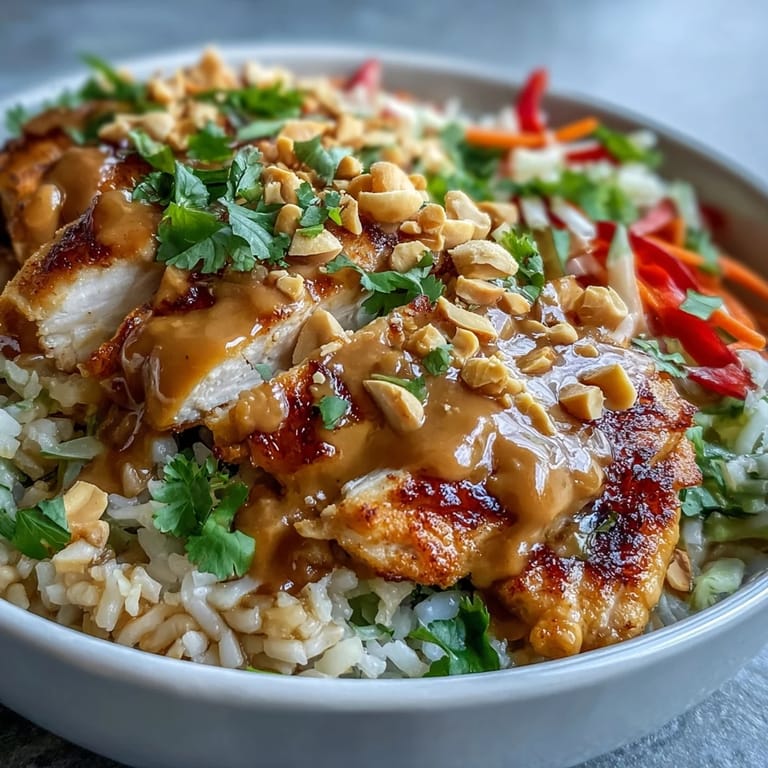
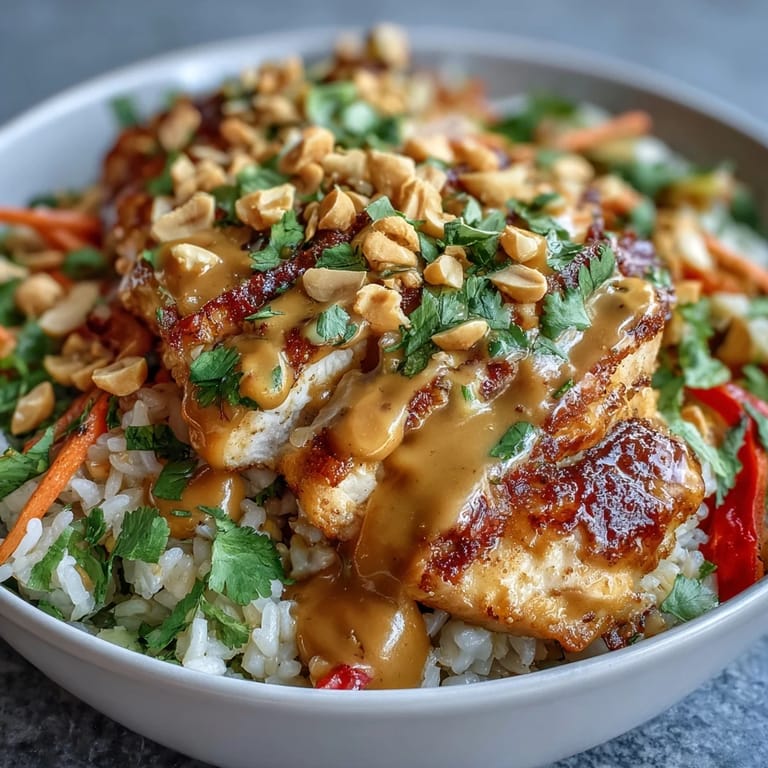
- Divide cooked grains among four bowls, then layer sliced chicken, fresh vegetables, and greens on top of each. Drizzle the peanut sauce generously over everything because this is where the whole bowl comes together.
- Finish with garnish and serve:
- Top each bowl with chopped roasted peanuts for crunch, fresh cilantro or parsley for brightness, and lime wedges on the side for squeezing. Serve immediately while the chicken is still warm and the vegetables are still crisp.
 Save to Pinterest
 This bowl became my solution for those moments when I wanted to feel nourished but wasn't in the mood for anything that felt like effort. There's something grounding about sitting down with all these colors and textures on one plate, knowing that every component serves a purpose beyond just filling space.
Make It Your Own
The beauty of a power bowl is that it adapts to whatever you have on hand and whatever your body wants that day. Swap the chicken for baked tofu, tempeh, or even hard-boiled eggs if you're vegetarian or just feeling a change. Add avocado slices if you want richness, toss in some edamame for extra protein, or roast some sweet potato cubes for a different kind of sweetness.
Sauce Wisdom
I've learned that the peanut sauce is actually the star of this whole situation, so it's worth taking a moment to get it right. Too much soy sauce and it tastes one-note salty, too much vinegar and it becomes tart and thin, and not enough honey leaves it tasting harsh. The warm water is crucial because it helps everything emulsify smoothly instead of staying separated and clumpy.
Storage and Leftovers
This bowl actually improves in the refrigerator for a day or two, though the vegetables do soften slightly. I keep the sauce separate and drizzle it fresh each morning because peanut sauce soaked into grain overnight becomes something entirely different, not necessarily worse but different. The chicken and grains hold beautifully, making this one of those rare meals that's actually better for meal prep than it is fresh.
- Store cooked components in separate containers so you can assemble fresh bowls and keep everything crisp.
- The peanut sauce keeps in the fridge for up to five days and actually thins out a bit as it sits, so add a splash of water when you reheat.
- Warm the grains and chicken gently if you prefer them warm; cold grain bowls are equally delicious if you have the energy for those.
 Save to Pinterest
 This peanut chicken power bowl has become my default answer to what's for dinner, which is exactly what a recipe should do. It's satisfying enough to feel like real food and straightforward enough that you'll actually make it again and again.
Recipe Questions & Answers
- → Can I make this bowl ahead of time?
Yes, prepare components up to 3 days in advance. Store grains, chicken, vegetables, and sauce separately in airtight containers. Reheat chicken and grains gently, then assemble when ready to eat. The sauce may thicken in the refrigerator—thin with a teaspoon of warm water before serving.
- → What vegetables work best in this bowl?
The recipe suggests carrots, bell peppers, cucumber, and purple cabbage for their crunch and color. You can also add shredded red cabbage, sliced radishes, steamed broccoli, roasted sweet potato cubes, or fresh sugar snap peas. Choose vegetables that maintain texture when chilled and complement the creamy peanut sauce.
- → How can I adjust the peanut sauce consistency?
The sauce should be pourable but thick enough to coat ingredients. Start with 2 tablespoons of warm water and whisk thoroughly. If it's too thick, add water one teaspoon at a time until you reach your desired consistency. For a thinner dressing, add up to 4 tablespoons. The sauce will naturally thicken as it cools.
- → Is this bowl gluten-free?
The base version can be gluten-free with simple substitutions. Choose quinoa or certified gluten-free grains instead of brown rice, and replace soy sauce with tamari. Double-check that all other ingredients, including spices and condiments, are certified gluten-free if you have severe sensitivities or celiac disease.
- → What protein alternatives can I use?
Baked tofu or tempeh work beautifully as vegetarian options—press, season with the same spices, and bake for 25-30 minutes until golden and crisp. Shredded rotisserie chicken saves time. For seafood variations, grilled shrimp or baked salmon fillets pair well with the peanut flavors. Adjust cooking times accordingly for your chosen protein.
- → Can I freeze the components?
Frozen cooked grains and chicken maintain quality for up to 3 months. Freeze them separately in portion-sized containers. The peanut sauce freezes well too—thaw overnight in the refrigerator. Avoid freezing fresh vegetables as they become limp. Instead, prep fresh vegetables when you're ready to serve for the best texture and flavor.