 Save to Pinterest
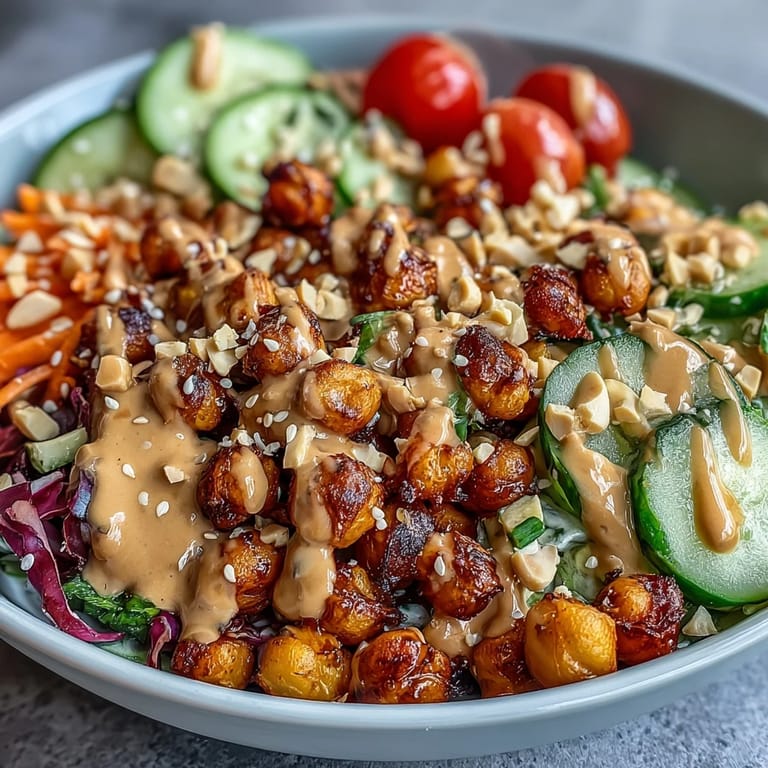
 There's something about the smell of chickpeas crisping up in the oven that makes you feel like you're actually taking care of yourself. I discovered this bowl on a Tuesday afternoon when I had half a can of chickpeas left over and absolutely no desire to cook anything complicated. The combination of crispy, salty legumes with creamy peanut sauce felt like the kind of meal that could satisfy both my hunger and my need to feel accomplished in the kitchen. What started as lazy improvisation became my go-to weeknight dinner, and now I make it so often that my friends joke I should trademark it.
I remember bringing this to a potluck where I was nervous it would get lost among casseroles and pasta salads, but it was gone within twenty minutes. A friend who'd been eating mostly fast food that month came back for seconds and told me it was the first meal all week that made her feel actually nourished. That's when I realized this bowl wasn't just convenient—it was genuinely good, the kind of food that matters.
Ingredients
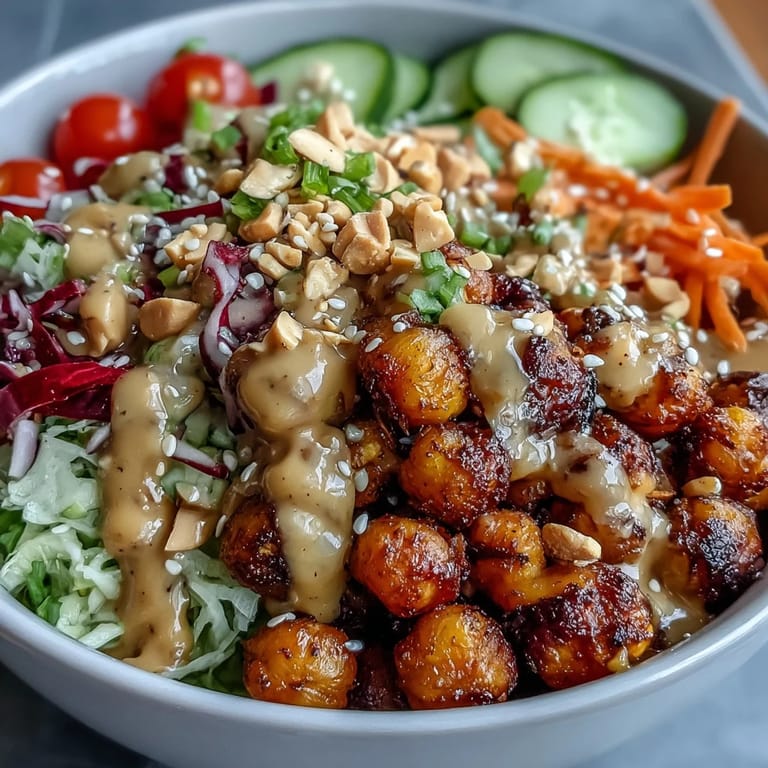
- Chickpeas (2 cans, drained and rinsed): These are your protein anchor—draining them well prevents soggy roasting, and rinsing removes that starchy canned taste you might not even realize was there until it's gone.
- Olive oil (1 tbsp): Just enough to coat the chickpeas so they crisp up properly in the oven rather than staying soft.
- Smoked paprika (1 tsp): This is the ingredient that makes people ask for your recipe—it adds depth and a subtle smokiness that elevates everything.
- Ground cumin, garlic powder, salt, and black pepper: This blend creates that savory backbone that makes even simple roasted chickpeas taste intentional.
- Brown rice or quinoa (2 cups cooked): Brown rice feels earthier and holds up better to the sauce, but quinoa adds extra protein if that matters to your dinner goals.
- Raw vegetables (cabbage, carrots, cucumber, tomatoes, edamame): The crunch and color keep everything feeling fresh—I learned this matters more than you'd think when you're eating bowls multiple times a week.
- Fresh cilantro (1/4 cup chopped): This seems optional until you taste it, then you realize it's what ties the whole thing together.
- Creamy peanut butter (1/3 cup): Use the natural kind if you can; the emulsifiers in regular peanut butter sometimes make the sauce separate as it sits.
- Soy sauce (2 tbsp, or tamari for gluten-free): This provides the umami depth that makes the sauce crave-worthy rather than just creamy.
- Maple syrup (1 tbsp): A touch of sweetness balances the saltiness and rounds out the flavor profile beautifully.
- Rice vinegar (1 tbsp): The acidity keeps the sauce from feeling heavy and adds brightness you'll taste on every bite.
- Sriracha or chili sauce (1 tsp optional): Add this if you want heat, skip it if you're serving people who prefer mild flavors.
- Garlic (1 clove, minced): Fresh garlic makes a difference here—powdered garlic is fine in the chickpeas, but the sauce deserves the real thing.
- Warm water (2-4 tbsp): You'll need this to get the sauce to the right consistency, and starting with warm water helps it blend smoothly.
- Roasted peanuts (2 tbsp chopped) and sesame seeds (1 tbsp): These are your finishing touches that add texture and make the bowl feel intentional rather than thrown together.
Tired of Takeout? 🥡
Get 10 meals you can make faster than delivery arrives. Seriously.
One email. No spam. Unsubscribe anytime.
Instructions
- Heat and prepare:
- Get your oven to 425°F and line a baking sheet with parchment paper—this prevents sticking and makes cleanup something you won't resent later. This is a good time to start any grains if they need cooking.
- Season and roast the chickpeas:
- Toss your drained chickpeas with olive oil and all those spices, making sure every single one gets coated. Spread them on the sheet and roast for 20–25 minutes, shaking the pan halfway through, until they're golden and sound crispy when you stir them.
- Build the peanut sauce:
- While the chickpeas are getting crispy, whisk together peanut butter, soy sauce, maple syrup, rice vinegar, minced garlic, and sriracha if you're using it, then add warm water a little at a time until it's smooth and pourable. Taste it—this is when you adjust for your preference.
- Prepare your vegetables:
- Shred, slice, and chop everything so it's ready to go. If you're doing this while the chickpeas roast, you'll finish everything around the same time.
- Assemble the bowls:
- Divide your rice or quinoa among four bowls, then arrange all your vegetables and roasted chickpeas on top in any way that appeals to you. There's no wrong way to do this.
- Finish and serve:
- Drizzle the sauce generously over everything, scatter chopped peanuts and sesame seeds on top, and serve with lime wedges so people can adjust the brightness to their taste.
 Save to Pinterest
 One evening I brought this bowl to a friend who'd just started trying to eat better, and she texted me the next day saying it was the first time she'd felt satisfied at dinner without wanting to eat something else an hour later. It was a small moment, but it made me realize that good food isn't about showing off—it's about nourishing the people around you in a way that actually sticks.
Why This Bowl Works
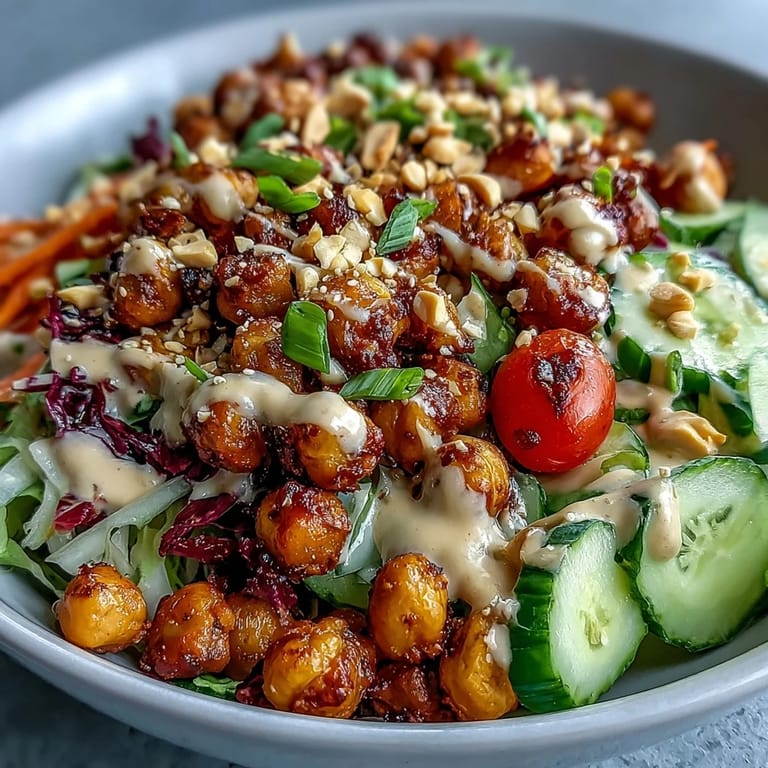
Every component plays a role here. The crispy chickpeas give you that satisfying textural contrast and make the whole bowl feel substantial rather than like a health food salad. The peanut sauce connects all the individual elements—without it, you've got a nice Buddha bowl, but with it, you've got something people genuinely want to eat. The vegetables provide crunch and color, keeping your mouth interested throughout the meal, and the grains anchor everything so you're full for hours afterward.
Building Your Own Version
The beauty of bowls is that they're endlessly customizable without falling apart. I've made this with roasted broccoli instead of raw vegetables on cold nights, with finely shredded kale when I wanted something more substantial, and with cauliflower rice when I was cutting back on carbs. The constants are the roasted chickpeas and peanut sauce—everything else can shift based on what you have and what sounds good.
Make-Ahead and Storage
You can roast the chickpeas and make the sauce up to three days ahead, which means on busy nights you're just assembling components rather than cooking from scratch. I like to keep the vegetables and grains separate from the sauce until serving, because the acidic peanut sauce softens things if they sit together too long. This is one of those meals that actually tastes better when you've thought about it a little, rather than thrown it together in a rush.
- Store roasted chickpeas in an airtight container where they'll stay crispy for up to four days.
- Keep the peanut sauce in a jar in the fridge for up to a week, and thin it with a bit of warm water before serving if it's thickened.
- Assemble your bowl fresh each time so vegetables stay crisp and everything tastes its best.
 Save to Pinterest
 This bowl became my answer to the question of what to eat when you want something nourishing that doesn't require a lot of planning. It's the kind of dish that proves you don't need complicated techniques or fancy ingredients to make something that genuinely matters.
Recipe Questions & Answers
- → How do I store leftovers?
Store components separately in airtight containers. The roasted chickpeas stay crisp for 2-3 days at room temperature, while vegetables and grains last 4-5 days refrigerated. Peanut sauce keeps for up to a week in the refrigerator.
- → Can I make this gluten-free?
Yes, simply substitute tamari for soy sauce in the peanut sauce. Ensure all other ingredients, including seasonings, are certified gluten-free if you have severe sensitivities.
- → What can I substitute for peanut butter?
Almond butter, cashew butter, or sunflower seed butter work well as alternatives. Tahini creates a thinner sauce with a different flavor profile. Adjust sweetener and liquid ratios as needed.
- → How can I add more protein?
Include baked tofu, grilled chicken, or hard-boiled eggs. Extra edamame, hemp seeds, or pumpkin seeds also boost protein content while maintaining the vegetarian profile.
- → Can I use canned chickpeas?
Canned chickpeas work perfectly. Drain and rinse thoroughly, then pat dry before roasting for optimal crispiness. Dried chickpeas cooked from scratch also yield excellent results.
- → What other grains work well?
Brown rice and quinoa are excellent choices. For variety, try farro, bulgur, barley, or cauliflower rice for a lighter option. Each brings unique texture and nutritional benefits.