 Save to Pinterest
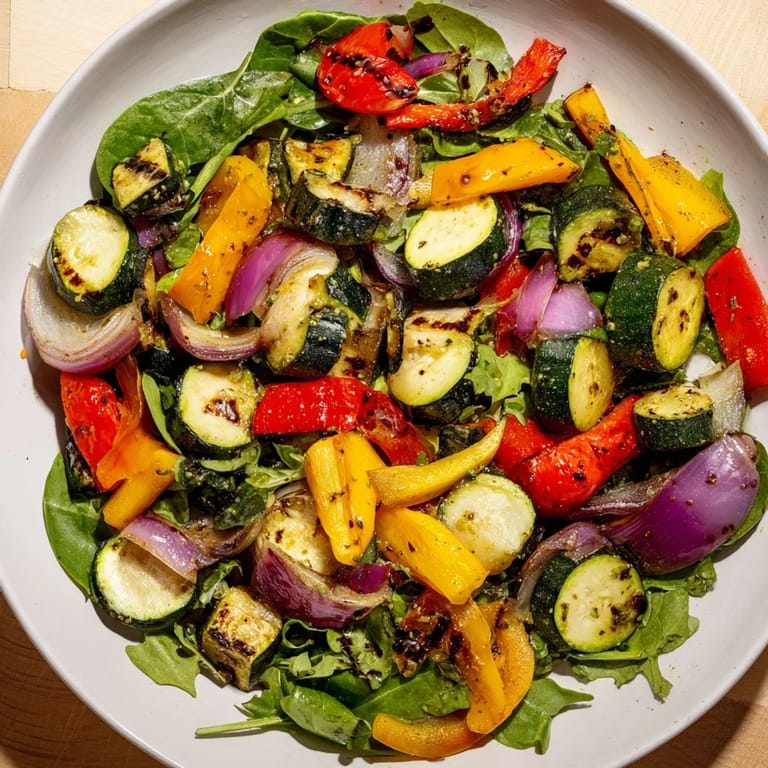
 There's something almost meditative about watching vegetables transform in a hot oven. I discovered this salad on a late summer afternoon when my garden was bursting with peppers and zucchini, and I'd grown tired of the usual raw preparations. The first time I roasted them all together, the caramelized edges and concentrated flavors made me realize I'd been missing something obvious all along. Now it's my go-to when I want something that feels substantial without being heavy, and that tastes even better the next day.
I brought this to a potluck last spring, skeptical that a salad would hold up against all the heavier dishes. But somehow it disappeared first, and three people asked me for the recipe right there on the porch. That's when I realized it wasn't pretentious or boring—it was exactly what everyone had been craving without knowing it.
Ingredients
- Zucchini: Medium slices work better than thin ones, as they won't disintegrate during roasting.
- Bell peppers (red and yellow): The color contrast is beautiful, and different colors have subtle flavor differences—red is sweeter, yellow slightly fresher.
- Red onion: It becomes jammy and mild when roasted, losing the sharp bite that scares some people away.
- Eggplant: Choose smaller ones with thinner skin, and don't skip salting it first—it'll release excess moisture and roast more evenly.
- Cherry tomatoes: Halving them prevents them from rolling around and lets them caramelize at the edges.
- Olive oil: Use a good one you'd actually taste, not the grocery store generic for the roasting.
- Dried Italian herbs: A blend keeps things simple, but you can use individual dried herbs if you have them on hand.
- Mixed salad greens: Arugula adds a peppery edge, spinach is mild, and spring mix is a safe middle ground.
- Extra virgin olive oil for dressing: This is where the fruity, delicate flavors shine through.
- Balsamic vinegar: The honey or maple syrup balances its acidity and adds body without sweetness overpowering the dish.
- Dijon mustard: This acts as an emulsifier and brings a subtle tangy note.
- Pine nuts or walnuts: Toasting them yourself makes a real difference in flavor and crunch.
- Parmesan or feta cheese: Both are optional, but either adds a salty, briny counterpoint to the roasted vegetables.
Tired of Takeout? 🥡
Get 10 meals you can make faster than delivery arrives. Seriously.
One email. No spam. Unsubscribe anytime.
Instructions
- Heat your oven and prepare:
- Get your oven to 425°F and line a baking sheet with parchment paper so cleanup is effortless and nothing sticks.
- Coat the vegetables:
- Toss everything—zucchini, peppers, onion, eggplant, and tomatoes—with olive oil, herbs, salt, and pepper until every piece glistens evenly. This is where the magic starts.
- Spread and roast:
- Give each vegetable its own space on the baking sheet so they roast instead of steam, then stir halfway through the 25-30 minute roast. You're looking for tender insides and caramelized golden edges.
- Build the dressing:
- While vegetables roast, whisk together the extra virgin oil, balsamic, mustard, garlic, and honey until it looks thick and creamy. Taste and adjust—more vinegar if you want tang, more oil if you want richness.
- Assemble the salad:
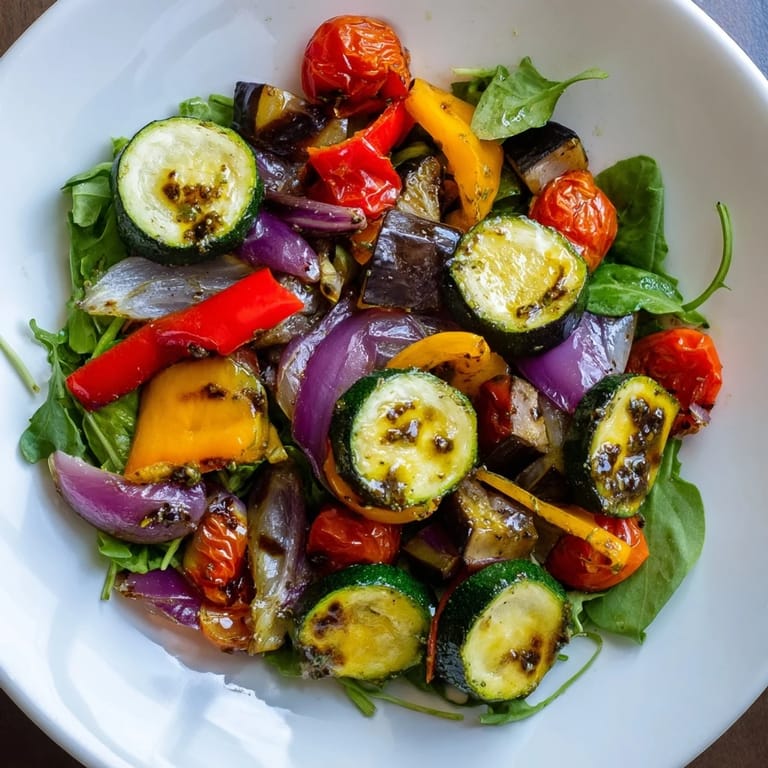
- Lay greens on a platter or plates, pile the warm roasted vegetables on top, and drizzle generously with dressing. The warm vegetables will slightly wilt the greens if you like that, or wait for them to cool if you prefer everything crisp.
 Save to Pinterest
 My daughter came home from school one day and actually asked for seconds of a salad, which had never happened before. She said it tasted like the vegetables were more themselves, and I understood exactly what she meant. That's the moment I stopped apologizing for serving salad.
Roasting Vegetables Changes Everything
Raw vegetables are honest and bright, but roasted ones are something else entirely. The heat draws out natural sugars, concentrates flavors, and creates caramelization that adds depth and a subtle sweetness. This is why the same zucchini or eggplant tastes completely different here than in a raw vegetable platter. The char marks aren't just pretty—they're where the most interesting flavors live.
Making the Dressing Matter
I used to make simple vinaigrettes and wonder why restaurant salads tasted better. The secret is that Dijon mustard and a touch of sweetness actually emulsify the oil and vinegar together, making it coat every bite instead of pooling at the bottom. The garlic should be minced almost to a paste so it distributes evenly. Once you understand that a dressing is an emulsion, not just oil and vinegar shaken together, everything changes.
Why This Works Warm or Cold
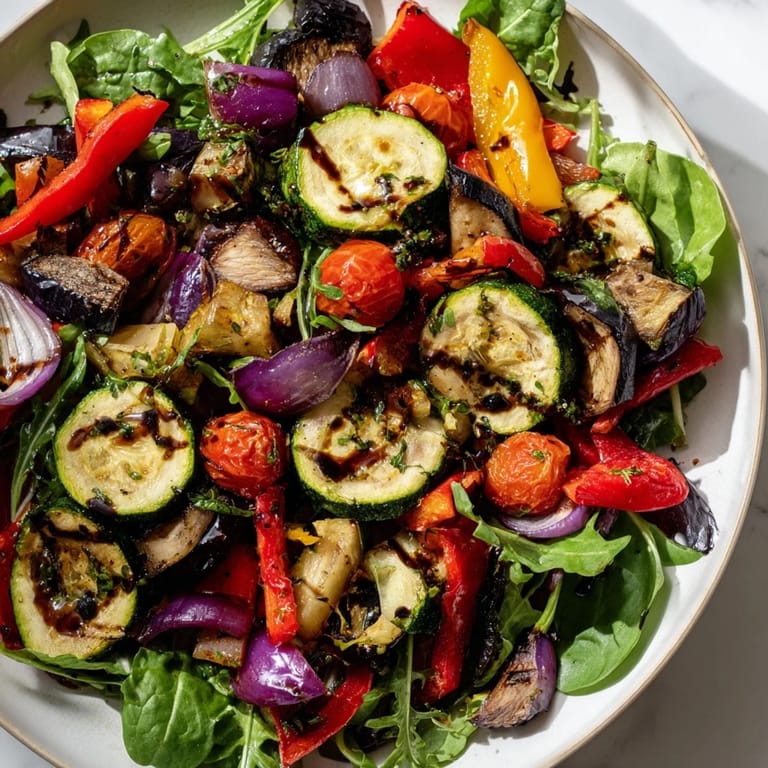
Roasted vegetables are forgiving in a way raw vegetables aren't. They don't wilt immediately when dressed, so you can toss them while warm and they'll hold their texture as they cool. This is why the salad tastes fantastic fresh from the oven, room temperature an hour later, or even chilled the next day. It's a salad that adapts to your timing, not the other way around.
- Warm vegetables right from the oven will wilt the greens slightly, which some people love for a tender, combined salad.
- Let vegetables cool to room temperature if you want the greens to stay crisp and maintain their own distinct texture.
- Store leftovers in the refrigerator and bring them to room temperature before serving for the best flavor.
 Save to Pinterest
 This salad reminds me that sometimes the simplest ideas—throw vegetables in the oven, make a good dressing, pile it all on greens—create something genuinely memorable. It's the kind of dish that sneaks into regular rotation without you planning for it to.
Recipe Questions & Answers
- → What vegetables work best for roasting in this salad?
Zucchini, bell peppers, eggplant, red onion, and cherry tomatoes roast well due to their texture and flavor, caramelizing beautifully without becoming mushy.
- → Can this dish be served cold or only warm?
It can be enjoyed warm or at room temperature, allowing flexibility based on preference or season.
- → How should the dressing be prepared for best flavor?
Whisk olive oil, balsamic vinegar, Dijon mustard, minced garlic, honey, salt, and pepper together thoroughly until emulsified for a balanced tangy-sweet taste.
- → What are good garnish options to enhance texture?
Toasted pine nuts or chopped walnuts add crunch, while shaved Parmesan or crumbled feta offer a creamy contrast.
- → Is this dish suitable for gluten-free and vegetarian diets?
Yes, it naturally fits gluten-free and vegetarian diets, especially when dairy-free cheese alternatives are used if preferred.