 Save to Pinterest
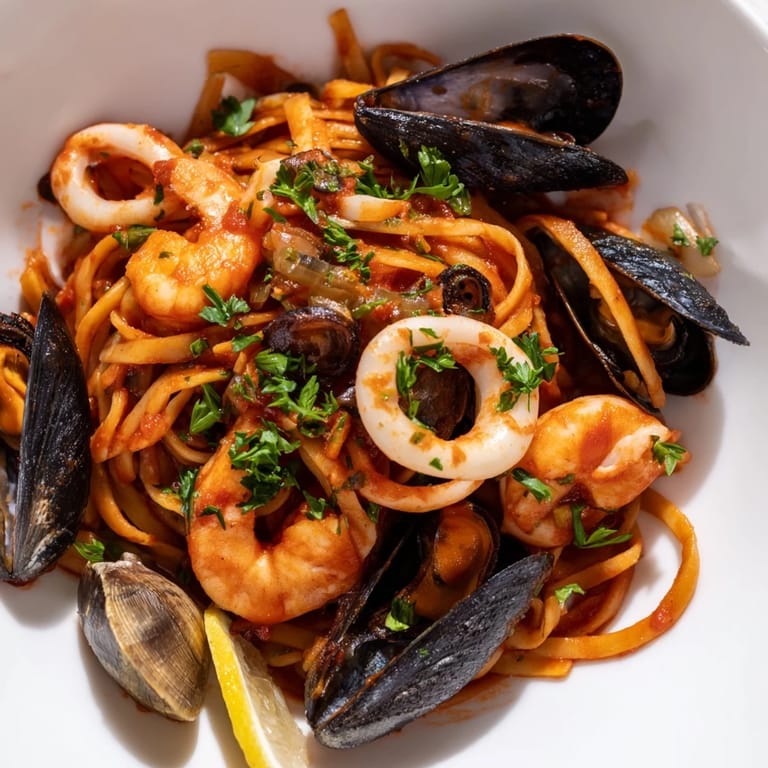
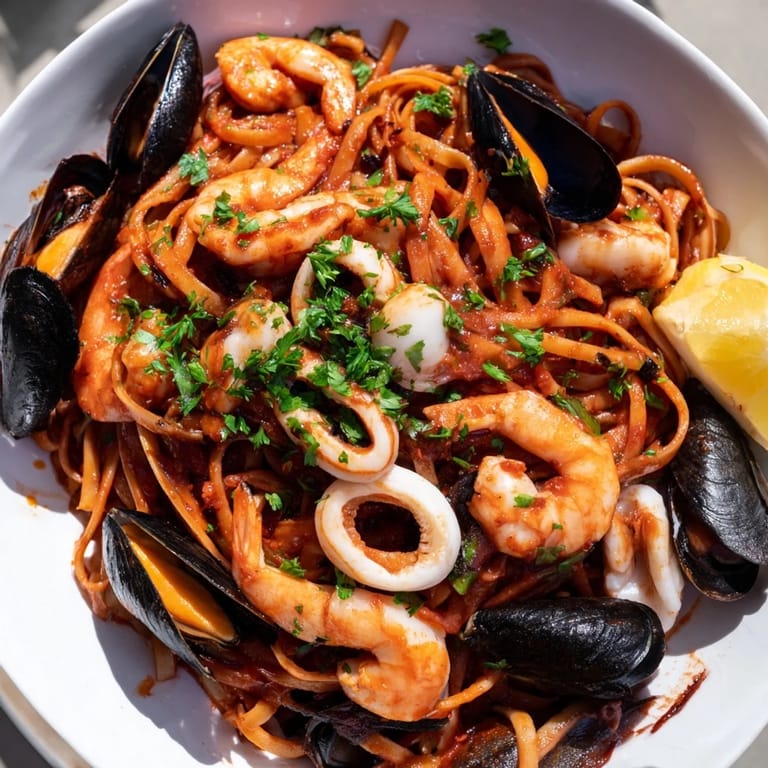
 There's something about the sizzle of seafood hitting hot oil that makes you feel like you're cooking on the Amalfi Coast, even if you're just in your kitchen on a Tuesday night. The first time I made this marinara, I was trying to recreate a meal from a tiny trattoria in Naples where the cook let me watch as he tossed shrimp and mussels into a bubbling red sauce. I came home determined, pulled together whatever fresh seafood I could find at the market, and somehow the kitchen filled with this incredible aroma that made everyone stop what they were doing. That dish became a go-to for nights when I wanted to feel fancy without overthinking it.
I remember making this for my sister when she came to visit unexpectedly one August, and she was skeptical because she'd never been adventurous with seafood before. But watching her twirl that first forkful of pasta and pause—really pause—to taste it, then go back for seconds was the kind of moment that reminds you why cooking for people matters. She's been asking for the recipe ever since.
Ingredients
- Shrimp (200 g): Large shrimp cook evenly and stay tender; peeling and deveining them yourself is worth the few extra minutes if you want to control the quality and avoid that slightly off taste from pre-peeled versions.
- Mussels (200 g): Buy them the day you're cooking and store them on ice; discard any that don't close when tapped or that feel heavy (they're likely full of sand).
- Squid rings (150 g): Fresh or frozen both work, but frozen squid is often already cleaned and cut, saving you mess; cook it quickly or it toughens up.
- Sea scallops (150 g): Pat them very dry before cooking—moisture is the enemy of a good sear and they'll steam instead of getting that sweet caramelized edge.
- Spaghetti or linguine (350 g): Linguine's wider strands grab the sauce better than spaghetti, but use what you have; reserve pasta water because that starch is liquid gold for loosening the sauce.
- Olive oil (2 tbsp): Use a decent quality one; it's the foundation and you'll taste the difference.
- Onion and garlic: The onion should be finely chopped so it melts into the sauce; don't skimp on the garlic—it's what gives the sauce depth.
- Red pepper flakes (1/2 tsp): Optional but recommended; they add a subtle warmth that balances the acidity of the tomatoes.
- Canned crushed tomatoes (800 g): San Marzano varieties are prized for good reason, but any quality brand works—taste a spoonful before you buy if possible.
- Tomato paste (2 tbsp): This concentrates the tomato flavor; stir it in with the garlic so it toasts slightly and loses that raw taste.
- Dry white wine (100 ml): Pinot Grigio or Sauvignon Blanc works beautifully; cook it down so the alcohol burns off and leaves just the acidity.
- Oregano and basil (1 tsp each, dried): Dried herbs are actually better here than fresh because they infuse more evenly into the sauce; add fresh basil as a garnish if you want that bright note.
- Sugar (1/2 tsp): This small amount tames the acidity without making the sauce sweet—it's a trick I learned from a pasta teacher who insisted every marinara needs it.
- Sea salt and black pepper: Taste as you go; seafood can be salty already, so adjust carefully.
- Fresh parsley (2 tbsp): Chop it just before serving so it doesn't wilt and lose its color.
- Lemon wedges: A squeeze of fresh lemon at the end brightens everything and cuts through the richness.
Tired of Takeout? 🥡
Get 10 meals you can make faster than delivery arrives. Seriously.
One email. No spam. Unsubscribe anytime.
Instructions
- Get the pasta going:
- Bring a large pot of salted water to a rolling boil—it should taste like the sea. Add your pasta and cook until it's just shy of tender; you want it to have a tiny bit of resistance when you bite it because it'll finish cooking in the sauce.
- Build the sauce base:
- Heat olive oil in a large, deep skillet over medium heat until it shimmers slightly. Add the finely chopped onion and let it cook gently for 2-3 minutes, stirring occasionally, until it turns translucent and starts to smell sweet—this is crucial, don't rush it.
- Wake up the aromatics:
- Stir in the minced garlic and red pepper flakes, cooking for just about a minute until the kitchen fills with that unmistakable garlicky aroma. If you cook it too long, garlic turns bitter, so watch the timing carefully.
- Deglaze with wine:
- Pour in the dry white wine and let it bubble away for 2 minutes, scraping up any flavorful bits stuck to the bottom of the pan. You'll see and smell the alcohol cooking off, leaving behind just the acidity.
- Bring in the tomatoes:
- Add the crushed tomatoes, tomato paste, oregano, basil, sugar, salt, and pepper, stirring everything together until it's well combined. Let it simmer uncovered for about 10 minutes, stirring now and then, while the flavors meld and the sauce deepens.
- Introduce the seafood:
- Start with the squid and scallops, simmering them for 2 minutes since they need a head start. Then add the shrimp and mussels, cover the skillet, and cook for another 3-4 minutes until the shrimp turn pink and the mussel shells open—any that stay stubbornly closed should be discarded.
- Marry pasta and sauce:
- Drain your pasta, add it to the skillet, and toss everything gently together. If the mixture looks too thick, ladle in some of that reserved pasta water, a little at a time, until you reach that silky, clingy consistency.
- Final taste and serve:
- Taste a spoonful and adjust the salt, pepper, or acidity as needed. Plate immediately, scatter fresh parsley on top, and serve with lemon wedges on the side.
 Save to Pinterest
 I'll never forget the night my neighbor smelled this cooking and showed up at my door asking what I was making—she'd walked outside to water her plants and couldn't ignore the smell. We ended up inviting her to dinner on impulse, and that's when I learned this dish has a way of bringing people together without any fuss or pretense.
Choosing Your Seafood
The beauty of this dish is that it works with whatever looks fresh at your fishmonger that day. I've made it with a mix of clams, mussels, and shrimp when the scallops looked tired, and it was equally delicious. The key is to ask the counter person what came in that morning—they'll steer you toward what's genuinely fresh, and you'll always end up with something wonderful.
Timing and the Joy of Preparation
One thing I've learned is that prep work makes or breaks this dish, so before the pan even touches heat, have everything chopped, peeled, and ready. There's a rhythm to cooking seafood—it moves fast once you start, and you won't want to be frantically mincing garlic while your pan is sitting empty. I sometimes prep everything in the morning, store it in the fridge, and then it's just assembly come dinner time, which makes the whole thing feel almost effortless.
Wine, Lemon, and the Little Touches
This is where the magic happens—the white wine isn't just an ingredient, it's what gives the sauce brightness and keeps it from tasting flat or one-dimensional. And that squeeze of fresh lemon at the end? It's the difference between a good pasta dish and one that makes people pause and ask what you did differently. Serve this with a crisp Pinot Grigio or Sauvignon Blanc on the side, maybe some crusty bread to soak up the last of the sauce, and suddenly dinner feels like an occasion.
- If you can't find fresh seafood, high-quality frozen works perfectly well—just thaw it completely and pat it dry before cooking.
- A splash of good quality seafood stock mixed with the tomatoes adds an extra layer of depth if you want to take it further.
- Make this dish just before serving; the longer pasta sits in sauce, the more it absorbs liquid and loses its tender texture.
 Save to Pinterest
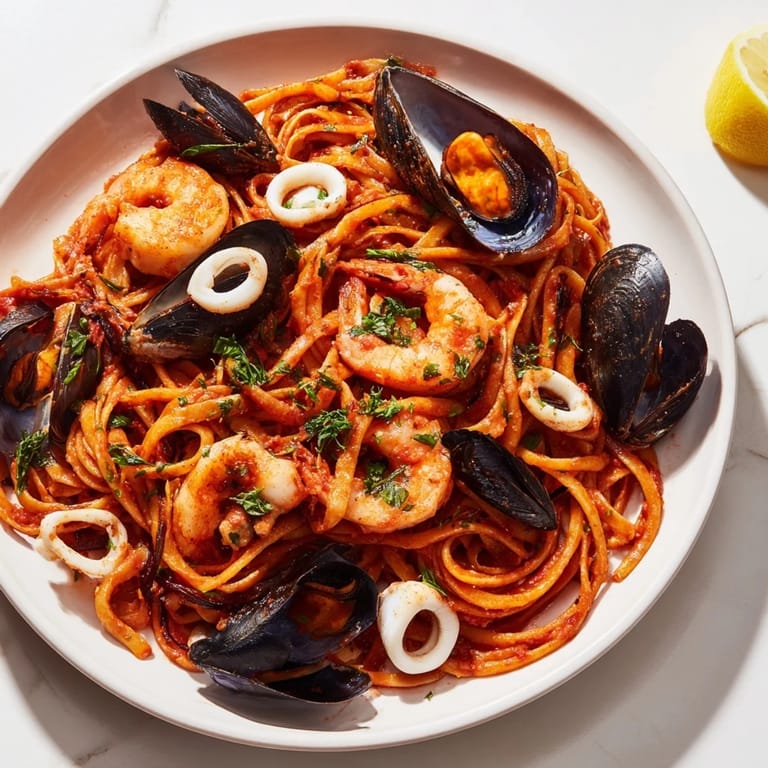
 This seafood marinara isn't fancy or complicated, but it captures something about cooking that I love: when you start with good ingredients and respect them, everything else falls into place. That's all it takes.
Recipe Questions & Answers
- → What seafood can I use in this dish?
The dish features shrimp, mussels, squid rings, and sea scallops, but you can substitute with firm white fish or clams if you prefer.
- → How do I ensure mussels open properly?
Cook mussels covered over medium heat until their shells open; discard any that remain closed to ensure freshness.
- → Can I use a different pasta type?
Spaghetti or linguine are recommended, but feel free to use any long pasta that holds sauce well.
- → How can I adjust the sauce thickness?
If the sauce is too thick, add reserved pasta water gradually to loosen it and achieve the desired consistency.
- → What wine pairs well with this dish?
A crisp Italian white wine, such as Pinot Grigio, complements the fresh seafood and tomato sauce beautifully.
- → Can I prepare the sauce ahead of time?
Yes, the marinara can be made in advance and gently reheated before adding the seafood and pasta for best flavor.