 Save to Pinterest
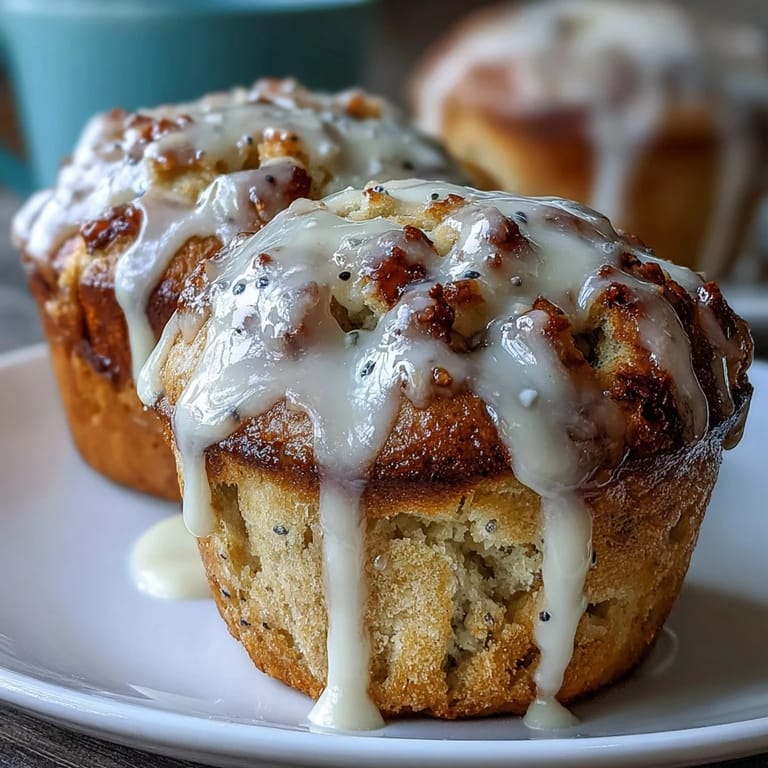
 There's something about the smell of lemon zest hitting hot butter that signals spring has officially arrived in my kitchen. I stumbled onto these muffins during a particularly gray March afternoon when I needed something bright to shake off the winter blues, and they've become my go-to move whenever I want to feel like I'm hosting a proper brunch without the stress. The poppy seeds add this unexpected crunch that keeps them interesting, while the glaze finishes them off with just enough sweetness to balance all that citrus. They're the kind of muffin that disappears faster than you'd expect, partly because people can't stop at just one.
My neighbor stopped by one Sunday morning while I was testing a batch, and the whole hallway smelled like a lemon grove. She sat at the counter eating one still warm from the rack with her coffee, and honestly, that moment felt like the whole point of baking—sharing something that makes someone's day a little lighter. She's been asking me to make them ever since, which tells you everything about how these muffins land with people.
Ingredients
- All-purpose flour (2 cups / 250 g): The foundation that keeps these muffins tender, not dense—don't pack it down when measuring or you'll end up with hockey pucks.
- Granulated sugar (1 cup / 200 g): Sweetness that caramelizes slightly at the edges and creates those little golden crusts everyone loves.
- Poppy seeds (2 tbsp): The textural surprise that makes each bite interesting and gives you that lovely flecked appearance.
- Baking powder (2 tsp) and baking soda (½ tsp): Together they lift the batter and create that perfect crumb structure that's airy but still holds together.
- Salt (½ tsp): A tiny pinch that makes the lemon flavor pop without tasting salty.
- Eggs (2 large): The binder that holds everything together and adds richness without heaviness.
- Whole milk (¾ cup / 180 ml): Moisture and tenderness in equal measure—don't skip it for a lighter version or they'll taste dry.
- Unsalted butter, melted and cooled (½ cup / 120 ml): The warmth and richness that makes these muffins feel luxurious; melting and cooling it first prevents scrambled egg situations.
- Freshly squeezed lemon juice (⅓ cup / 80 ml): The heart of this recipe, so fresh lemons are worth the squeeze—bottled juice tastes flat by comparison.
- Lemon zest (2 tbsp): Where the bright, perfumy flavor lives; don't waste the oil in that zest by using a microplane grater instead of a channel zester.
- Vanilla extract (1 tsp): A whisper of warmth that rounds out the lemon without competing with it.
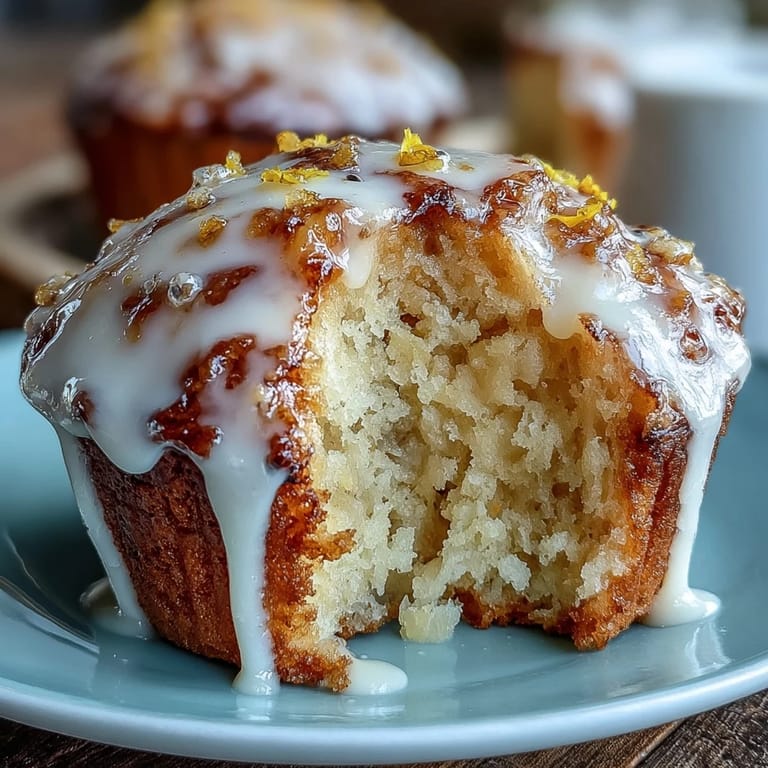
- Powdered sugar (1 cup / 120 g) and lemon juice (2-3 tbsp) for glaze: The finishing touch that seals in moisture and adds that beautiful glossy shine that catches the light.
Tired of Takeout? 🥡
Get 10 meals you can make faster than delivery arrives. Seriously.
One email. No spam. Unsubscribe anytime.
Instructions
- Get your oven ready and prep your pan:
- Heat your oven to 375°F (190°C) and line your muffin tin with paper liners or give it a light grease—this prevents sticking and makes cleanup infinitely easier. Have everything measured out and your workspace ready, because once you start mixing, you'll want to keep things moving.
- Combine your dry ingredients:
- In a large mixing bowl, whisk together the flour, sugar, poppy seeds, baking powder, baking soda, and salt until everything is evenly distributed. This whisking step ensures the leavening agents are spread throughout, so you get consistent rise in every single muffin.
- Mix your wet ingredients:
- In another bowl, whisk together the eggs, milk, cooled melted butter, fresh lemon juice, lemon zest, and vanilla until they're fully combined and look homogeneous. The key here is fully incorporating the zest so you get those flecks of bright flavor throughout, not just clumps in one spot.
- Bring it all together gently:
- Pour the wet ingredients into the dry ingredients and stir with a wooden spoon or spatula just until combined—this is where restraint matters. Overmixing activates the gluten and makes tough, dense muffins, so stop as soon as you don't see streaks of flour anymore.
- Fill your muffin cups:
- Divide the batter evenly among the 12 muffin cups, filling each about three-quarters full—this gives them room to rise without spilling over the edges. An ice cream scoop makes this step quick and keeps everything uniform.
- Bake until golden and set:
- Bake for 18–20 minutes, until the tops turn golden brown and a toothpick inserted into the center comes out clean with just a few moist crumbs. Don't overbake or they'll dry out, but don't underbake either or the centers will be gummy.
- Cool and transfer:
- Let the muffins rest in the pan for 5 minutes—this sets them so they won't fall apart when you move them—then transfer them to a wire rack to cool completely. This cooling step is crucial for the glaze to adhere properly and for the crumb to set.
- Make and apply the glaze:
- Whisk together the sifted powdered sugar and lemon juice until you have a smooth, pourable consistency—add more juice if it's too thick or more sugar if it's too thin. Once the muffins are completely cooled, drizzle the glaze over the tops in a loose pattern and let it set for at least 15 minutes before serving.
 Save to Pinterest
 I made these for a potluck last spring where everyone was supposed to bring something savory, and I showed up with a box of bright yellow muffins that smelled like a lemon tree. By the end of the afternoon, the box was empty and three people had already asked for the recipe, which felt like a small victory in a room full of casseroles. There's something about these muffins that shifts the mood of a table—suddenly everyone's sitting a little straighter, talking a little brighter.
The Science of the Crumb
What makes these muffins stay tender instead of becoming tough is the balance between acid and base—the lemon juice reacts with the baking soda to create lift, while the baking powder provides backup leavening. This dual-action approach gives you a muffin that rises beautifully but still maintains a delicate, tender interior. The lemon juice also adds moisture that keeps them fresh longer, so you can actually make these a day or two ahead without them drying out.
Variations That Actually Work
I've played with these enough to know what changes and what breaks them. Substituting Greek yogurt for half the butter creates a denser but moister muffin that's still delicious—just don't go all yogurt or they'll taste sour. Adding an extra tablespoon of zest intensifies the lemon punch beautifully, but stop there or you'll get bitterness instead of brightness.
Timing and Storage Secrets
The best time to eat these is actually the day after you bake them, when the flavors have melded and the glaze has set into something almost candy-like. They keep in an airtight container for up to four days, though they start tasting a little less bright around day three. You can also freeze them unfrosted for up to three months—just thaw them at room temperature and glaze them fresh for that just-made moment.
- Make the batter up to 4 hours ahead and refrigerate it, but don't let it sit overnight or the baking powder loses its lift.
- If you overbake them slightly, a light syrup made from lemon juice and sugar brushed onto the warm muffins will revive their moisture.
- Store unfrosted muffins in the freezer and glaze them after thawing for maximum freshness and shine.
 Save to Pinterest
 These muffins have become my answer to the question 'what should I bring?' and I've never once regretted choosing them. There's something about handing someone a box of these and watching their face light up that reminds me why I love to bake.
Recipe Questions & Answers
- → What gives these muffins their lemon flavor?
Freshly squeezed lemon juice and lemon zest add bright, natural citrus notes throughout the muffins.
- → How can I achieve a moist texture in these muffins?
Incorporating melted butter and milk helps keep the crumb tender and moist without heaviness.
- → Why are poppy seeds used in this dish?
Poppy seeds provide a pleasant crunch that contrasts with the soft muffin crumb and complement the lemon flavor.
- → How is the glaze prepared and applied?
The glaze combines powdered sugar and lemon juice whisked until smooth, then drizzled over cooled muffins to add a sweet tangy finish.
- → Can I make substitutions to reduce fat content?
Yes, substituting half the butter with Greek yogurt can lighten the texture while maintaining moisture.