 Save to Pinterest
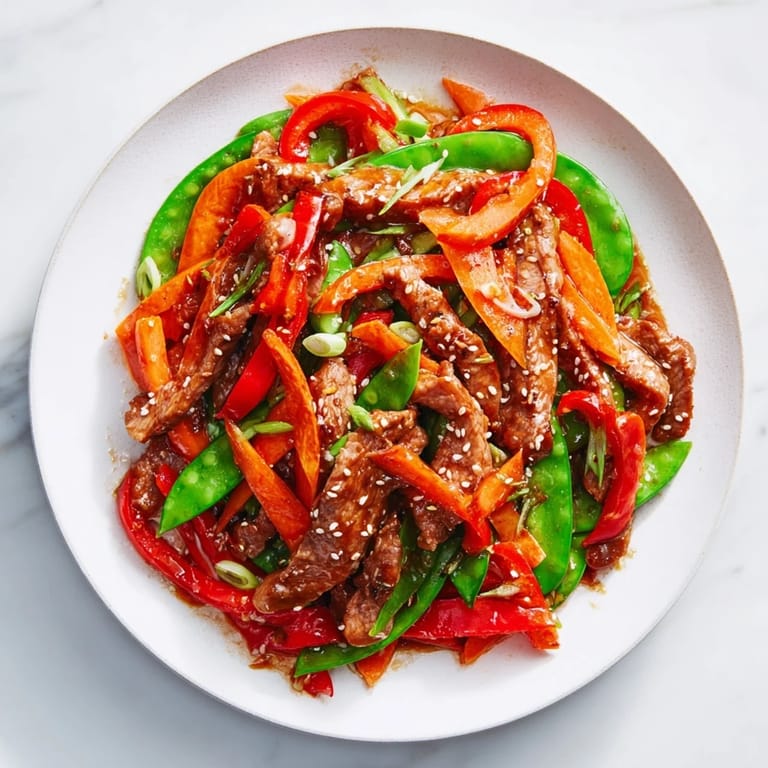
 There's something magical about the sound of a hot wok hitting medium-high heat, and that's exactly what drew me to master this teriyaki pork stir-fry. My partner came home one evening raving about a lunch she'd had downtown—glossy pork, snappy vegetables, a sauce that tasted both sweet and savory at once—and I decided right then to figure it out. Turns out, the secret isn't fancy techniques or exotic ingredients; it's understanding that speed matters, and a well-balanced sauce can transform simple proteins into something restaurant-worthy in under thirty minutes. Now it's become my go-to weeknight dinner, the one I make when I want everyone at the table happy without spending hours in the kitchen.
I remember making this for my sister's surprise dinner party, panicking slightly because I had maybe forty-five minutes total. The pork browned perfectly in the first few minutes, the vegetables held their crunch, and when that sauce hit the hot pan and thickened before my eyes—silky and glossy—I felt like I'd unlocked something important about weeknight cooking. She kept asking what restaurant I'd ordered from, and watching her face when I said I'd made it was worth every single minute spent at the cutting board.
Ingredients
- Pork tenderloin, thinly sliced: Tenderloin is forgiving and cooks fast; I learned to slice it against the grain and keep the pieces relatively uniform so everything finishes at the same moment.
- Red bell pepper: The sweetness balances the savory sauce, and strips cook just enough to stay crisp if you don't overdo it.
- Snap peas: These keep their crunch even under the sauce's heat, which is exactly what you want in a stir-fry.
- Carrot, julienned: Thin slices mean they cook through without turning mushy; I learned this after one batch of tough, undercooked carrots.
- Green onions: Half goes in near the end for flavor, half garnishes at the finish for that fresh, crisp bite.
- Garlic and ginger: Thirty seconds in the hot oil releases everything they have; don't skip this, and don't let them brown.
- Soy sauce and mirin: This is the foundation of the sauce; mirin adds body and sweetness without needing extra sugar.
- Brown sugar or honey: A touch rounds out the flavor profile; honey dissolves more smoothly if that matters to you.
- Rice vinegar: A small amount keeps the sauce from feeling cloying, adding a subtle brightness.
- Cornstarch: This is what turns the liquid into a glaze; whisk it with cold water first to avoid lumps.
- Sesame oil: A teaspoon is enough; more than that and it overpowers everything else.
- Vegetable oil: Use something with a high smoke point; peanut oil works beautifully here too.
Tired of Takeout? 🥡
Get 10 meals you can make faster than delivery arrives. Seriously.
One email. No spam. Unsubscribe anytime.
Instructions
- Build your sauce first:
- Whisk together soy sauce, mirin, brown sugar, rice vinegar, cornstarch, cold water, and sesame oil in a small bowl until smooth. I learned the hard way that whisking the cornstarch with cold water prevents those frustrating lumps that can wreck an otherwise perfect dish. Set it aside and don't look back until you're ready to use it.
- Get your wok singing hot:
- Heat one tablespoon of oil in a large wok or skillet over medium-high heat until it shimmers and moves easily around the pan. You'll know it's ready when a test piece of pork sizzles aggressively the moment it touches the surface.
- Sear the pork until golden:
- Add sliced pork and stir-fry for three to four minutes, breaking it into pieces and tossing frequently, until the outside is browned and the inside is just cooked through. Pull it all onto a clean plate and resist the urge to crowd the pan; pork cooks faster when it has breathing room.
- Give vegetables their moment:
- Add the remaining oil, then bell pepper, snap peas, and carrot, stirring constantly for two to three minutes until they're tender but still have some resistance when you bite one. This is where you really can't walk away; vegetables go from crisp to mushy in about thirty seconds if you're not paying attention.
- Wake up the aromatics:
- Toss in garlic, ginger, and half the green onions, stirring for about thirty seconds until the kitchen suddenly smells like someone's cooking something serious. The sizzle will calm down a bit once the moisture hits the hot pan, and that's exactly right.
- Bring everything back together:
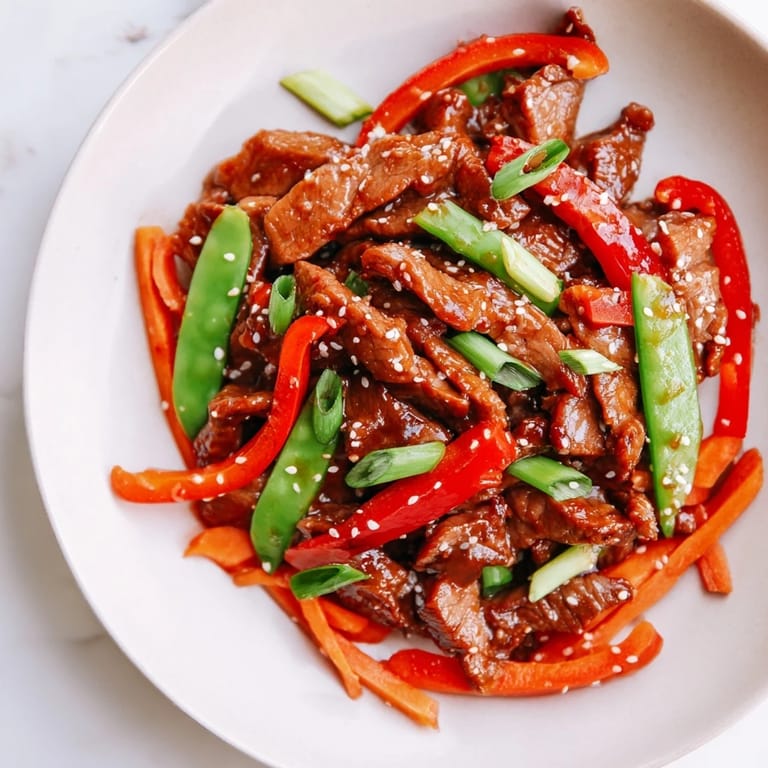
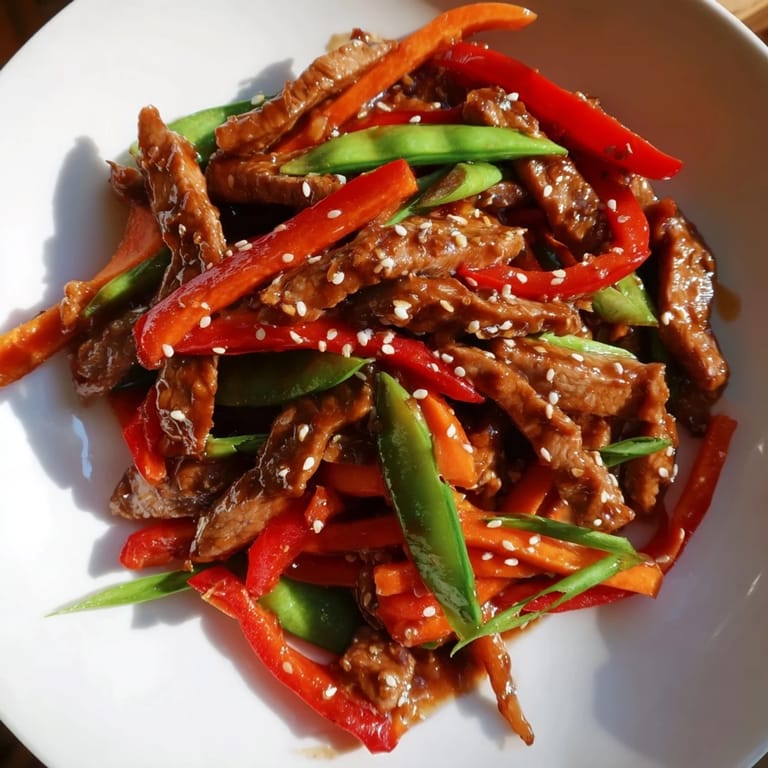
- Return the pork to the wok, give the sauce a quick stir to recombine any cornstarch that's settled, pour it over everything, and toss constantly for one to two minutes. Watch as the liquid thickens into a glossy glaze that clings to every piece of pork and vegetable; that's when you know it's done.
- Finish and serve:
- Remove from heat, scatter sesame seeds and remaining green onions over the top if you're using them, and serve immediately over steamed rice or noodles. Hot food on hot plates makes all the difference; I always grab my bowls about a minute before the stir-fry finishes.
 Save to Pinterest
 This dish became something more than just dinner one night when my kid, who refuses most vegetables with the intensity of a tiny attorney, asked for seconds and didn't even pick around the snap peas. That's the real win—when something you make brings people back to the table, not because they have to, but because they genuinely want to.
Why the Wok Matters
A wok's curved shape and steep sides aren't decorative; they actually change how your food cooks and moves. The heat concentrates at the bottom, and everything tosses up and away from the direct flame for a moment before falling back down. This constant motion means nothing sits long enough to stick or burn, and the vegetables end up with those beautiful char marks instead of steamed into submission. I've made this same recipe in a regular skillet and it works, but something gets lost—probably because the vegetables and pork are all fighting for real estate instead of dancing around a hot surface.
Sauce Science and Substitutions
The real magic of this sauce is the balance between umami, sweetness, and acid, which is why I'm hesitant to swap ingredients willy-nilly. That said, I've learned a few honest tweaks over the years. Honey works just fine instead of brown sugar if that's what you have, though brown sugar dissolves a touch faster. If mirin feels too precious or hard to find, you can use a tablespoon of sugar mixed with a tablespoon of sake or even water, though you lose some of mirin's subtle depth. For gluten-free eating, tamari is non-negotiable; regular soy sauce will work in a pinch, but tamari tastes better and sidesteps the whole gluten question entirely.
Making It Your Own
The beauty of a stir-fry is that it adapts to whatever's in your crisper drawer or whatever protein you're in the mood for. I've made versions with chicken breast, sliced thin to match the cooking time, and honestly it's equally delicious. Tofu, pressed and cubed, becomes wonderfully caramelized in the initial pan sear. Broccoli, mushrooms, bok choy, even baby corn—they all work beautifully if you adjust the cooking time based on how tough they are. Green beans take longer than snap peas; delicate greens like spinach go in at the very end so they just wilt in the residual heat.
- Add broccoli or mushrooms if you want more substance, adjusting cooking time so everything finishes at once.
- Substitute chicken or tofu for pork without changing anything else about the recipe.
- Finish with a sprinkle of crushed peanuts or cashews if you want extra texture and richness.
 Save to Pinterest
 This teriyaki pork stir-fry has become the dish I make when I want to feel like I'm cooking something impressive without the stress, and when I want people to feel cared for without the fussing. Every time, it reminds me that good food doesn't need to be complicated—just honest and well-timed.
Recipe Questions & Answers
- → What cut of pork works best for this dish?
Thinly sliced pork tenderloin is ideal for quick cooking and tender texture, but alternative lean cuts can also be used.
- → Can I substitute vegetables in this stir-fry?
Yes, vegetables like broccoli, mushrooms, or bok choy can be added or swapped to customize the mix.
- → How can I make the sauce gluten-free?
Replace soy sauce with tamari to ensure a gluten-free teriyaki glaze without altering flavor much.
- → What is the best method for achieving a glossy sauce finish?
Whisking cornstarch into the sauce before cooking and stirring constantly as it thickens helps achieve a smooth, shiny glaze.
- → How long should I stir-fry the pork for optimal tenderness?
Cook pork slices over medium-high heat for 3-4 minutes until just browned and cooked through to keep them tender.