 Save to Pinterest
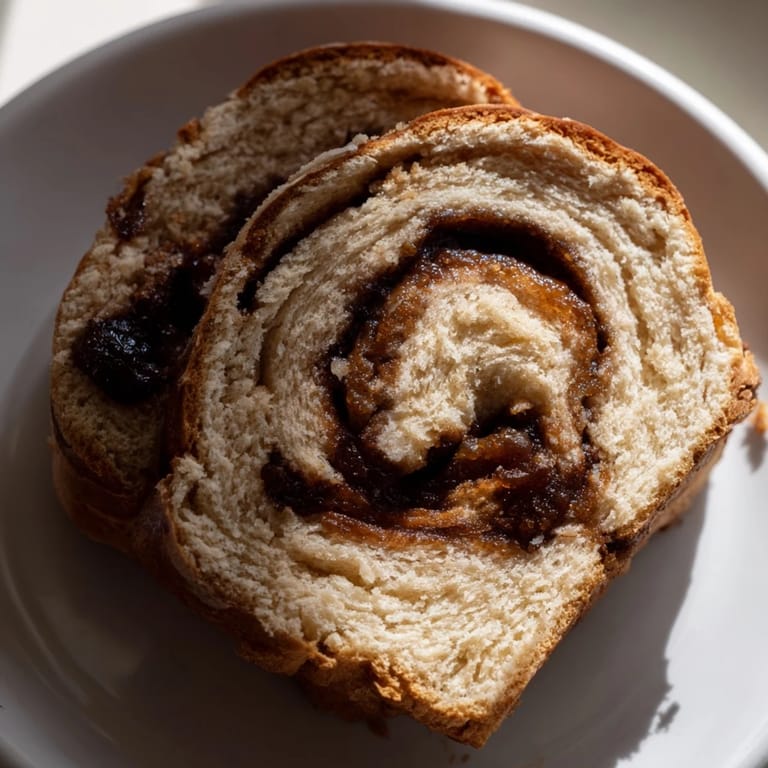
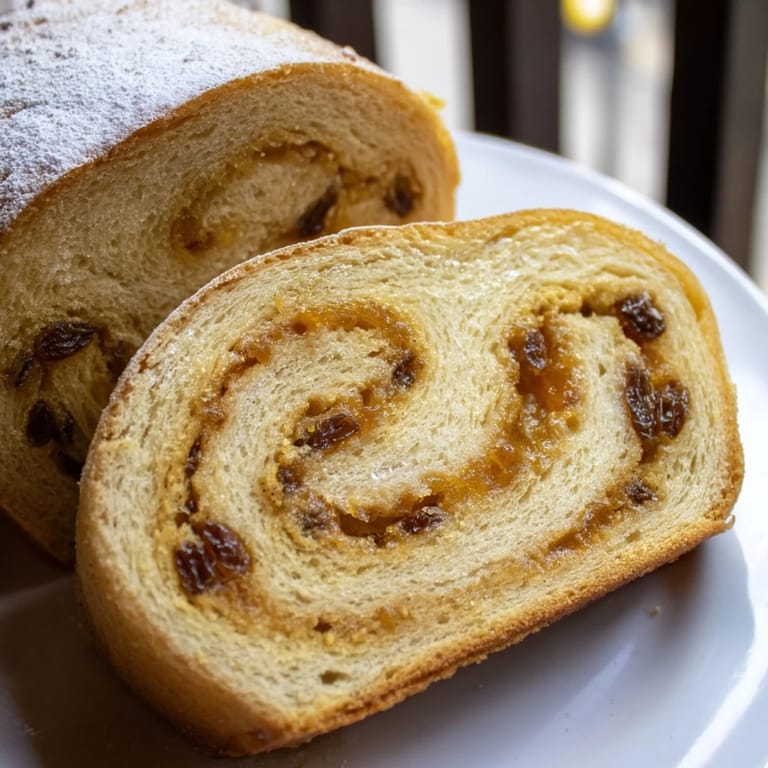
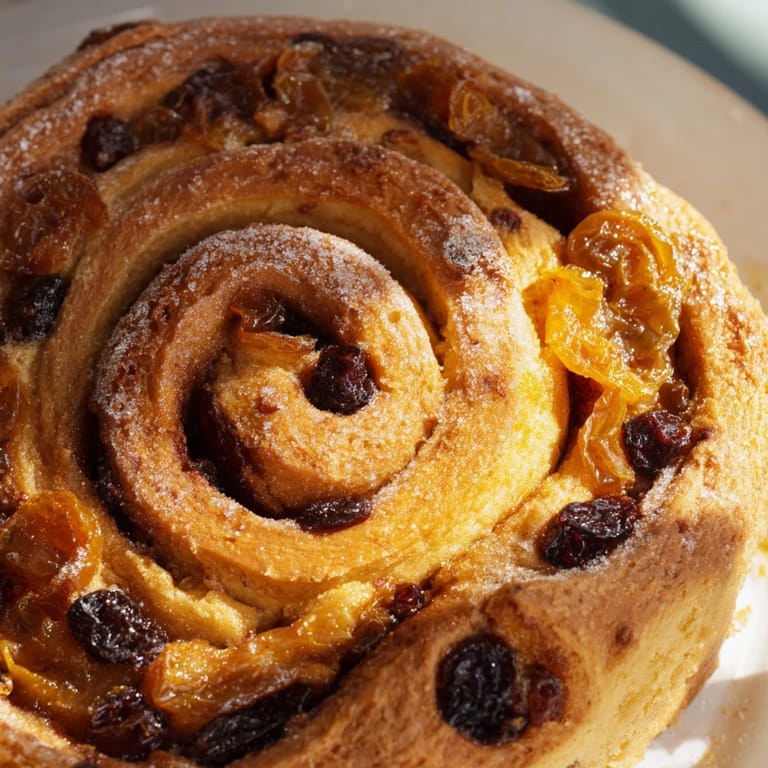
 My kitchen smelled like a bakery on Sunday mornings when I finally nailed this loaf. I'd tried cinnamon bread before, but the swirl always bled into the dough or the raisins clumped in one corner. Then I learned to spread the butter thin and roll it tight, and suddenly everything clicked. The first slice, still warm, with butter melting into the spiral—I knew I'd never buy store-bought again. Now it's the bread I make when I want the house to feel like home.
I made this for a brunch once and watched people go quiet after the first bite. Someone said it tasted like their grandmother's kitchen, and I realized that's exactly what good bread does—it brings back memories you didn't know you were missing. I've made it dozens of times since, and it never gets old. There's something about slicing into a loaf you baked yourself that feels like a small, proud victory.
Ingredients
- Bread flour: The extra protein gives this loaf structure and chew, which keeps the swirl intact and prevents it from collapsing as it rises.
- Active dry yeast: Make sure your milk is warm but not hot—too much heat kills the yeast, and you'll end up with a dense brick instead of a fluffy loaf.
- Whole milk: The fat in whole milk makes the crumb tender and rich, and I've tried it with skim milk—it's just not the same.
- Unsalted butter: Softened butter mixes into the dough easily and spreads smoothly over the rolled dough without tearing it.
- Raisins: I use regular dark raisins, but golden ones work too, and if you soak them in warm water for ten minutes first, they stay plump and juicy through baking.
- Light brown sugar: The molasses in brown sugar adds depth to the cinnamon filling and keeps it from tasting flat or one-note.
- Ground cinnamon: Use fresh cinnamon if you can—the difference in fragrance is noticeable, especially when the bread is still warm.
Tired of Takeout? 🥡
Get 10 meals you can make faster than delivery arrives. Seriously.
One email. No spam. Unsubscribe anytime.
Instructions
- Proof the yeast:
- Pour warm milk over the yeast and wait for it to foam and smell faintly sweet. If nothing happens after five minutes, your yeast is dead or your milk was too hot.
- Mix the dough:
- Stir in sugar, egg, and butter until everything looks shaggy and wet. Then add the flour and salt, and let the mixer do the work until the dough pulls away from the bowl.
- Knead until smooth:
- The dough should feel soft and slightly tacky but not sticky. If it clings to your hands, dust in a little more flour, one tablespoon at a time.
- Fold in the raisins:
- Add them at the end so they don't break apart during the long knead. A few quick pulses with the hook is all it takes.
- Let it rise:
- Cover the bowl with a damp towel and set it somewhere warm but not hot—I use the top of my fridge. The dough should double in size and feel airy when you poke it.
- Make the cinnamon sugar:
- Mix brown sugar and cinnamon in a small bowl until combined. It should look like wet sand and smell incredible.
- Roll out the dough:
- Punch it down gently to release the air, then roll it into a rectangle on a floured surface. Keep the edges as even as you can—it makes rolling easier.
- Spread the filling:
- Use softened butter and spread it thin, leaving a border so the filling doesn't ooze out the sides. Sprinkle the cinnamon sugar evenly, pressing it lightly into the butter.
- Roll it tight:
- Start from the short end and roll it like a sleeping bag, firm but not so tight that the dough tears. Pinch the seam and tuck the ends under neatly.
- Second rise:
- Place the log seam-side down in a greased loaf pan, cover it, and let it puff up again. It should rise just above the rim of the pan.
- Bake until golden:
- The top should be deep golden brown and sound hollow when you tap it. If the top browns too fast, tent it loosely with foil halfway through.
- Cool and brush:
- Let it cool for ten minutes, then brush the top with melted butter for shine and flavor. Resist the urge to slice it hot—it'll squish under the knife.
 Save to Pinterest
 The first time I brought this to a potluck, someone asked if I'd bought it from a fancy bakery. I said no, just my kitchen and a Sunday afternoon, and they looked at me like I'd done something magical. That's the thing about homemade bread—it doesn't have to be perfect to feel special. It just has to be yours.
How to Store and Reheat
I keep mine wrapped in a clean kitchen towel on the counter for up to three days, and it stays soft and fresh. If you want it to last longer, slice it and freeze it in a zip-top bag—then you can toast slices straight from frozen. A quick pass under the broiler with butter turns it into breakfast in under two minutes.
Variations Worth Trying
I've swapped the raisins for dried cranberries and added orange zest to the dough, and it was like a whole new recipe. Chopped walnuts or pecans folded in with the raisins add crunch, and a drizzle of cream cheese glaze on top makes it feel like a coffee shop treat. You can also double the cinnamon sugar if you like it really bold—I won't judge.
What to Serve It With
This bread is perfect on its own, but I love it toasted with salted butter or a thick smear of cream cheese. It's also great for French toast—the cinnamon swirl caramelizes beautifully in the pan. Pair it with hot coffee or tea, and you've got yourself a quiet, cozy morning.
- Serve it warm with honey butter for a simple but luxurious breakfast.
- Toast thick slices and top with ricotta and a drizzle of maple syrup.
- Use day-old slices for bread pudding—it soaks up custard like a dream.
 Save to Pinterest
 This is the kind of bread that makes people linger at the table a little longer. Bake it once, and it'll become the loaf you turn to when you want your kitchen to feel warm and full of life.
Recipe Questions & Answers
- → What type of flour works best for this loaf?
Bread flour is recommended for its higher protein content, which helps create a chewy, airy texture.
- → Can I use golden raisins instead?
Yes, golden raisins provide a slightly different sweetness but work well in this swirl bread.
- → How do I achieve a well-defined cinnamon swirl?
Roll the dough evenly into a rectangle, spread the cinnamon sugar mixture fully, then roll tightly to ensure distinct layers.
- → Is there a way to make the crust softer?
Brushing the loaf with melted butter right after baking adds richness and softens the crust.
- → How should I store the bread to keep it fresh?
Keep it in an airtight container at room temperature for up to 3 days, or freeze slices for longer storage.
- → Can I add nuts to the dough?
Chopped walnuts or pecans can be mixed in with the raisins for added texture and flavor.