 Save to Pinterest
 There's something magical about opening the fridge on a sweltering afternoon and pulling out a bowl of cold sesame noodles—the kind that make you slow down and actually taste every slurp. I discovered this dish during a summer when I was too tired to turn on the stove, so I boiled pasta, whisked together whatever Asian pantry staples I had, and created something that became my default lunch for months. The silky sesame sauce coats each strand with such effortless comfort that it feels less like cooking and more like assembling edible sunshine.
I remember bringing a huge batch to a potluck where everyone was drowning in heavy casseroles, and within minutes the bowl was completely empty—people were coming back asking if I could share the recipe. That moment taught me that sometimes the simplest dishes, made with genuine care, are the ones that linger in people's memories.
Ingredients
- Wheat noodles or spaghetti (350 g): Regular pasta works beautifully here, though I've also used ramen noodles for a fun twist—just skip the seasoning packet.
- Sesame oil (1 tbsp for noodles, 1 tbsp toasted for sauce): This is the soul of the dish, so don't skip the toasted version in the sauce; it has a deeper, nuttier flavor that makes all the difference.
- Tahini or sesame paste (4 tbsp): Chinese sesame paste is slightly more potent than tahini, but either works—just whisk slowly to avoid lumps.
- Smooth peanut butter (2 tbsp): This adds richness and helps emulsify the sauce; use the regular kind, not natural, for the smoothest results.
- Low-sodium soy sauce (3 tbsp): The sodium level matters here because you're tasting each ingredient distinctly, not drowning them in salt.
- Rice vinegar (2 tbsp): This bright acidity keeps the sauce from feeling heavy on your palate even when it's scorching outside.
- Honey (1 tbsp): Maple syrup works for vegan versions, but honey dissolves more cleanly into cold sauce.
- Fresh garlic and ginger: Grate these finely so they distribute evenly; I learned the hard way that chunky bits are less pleasant in cold noodles.
- Chili oil (1–2 tsp optional): Start with less than you think you'll want—you can always add more heat, but you can't take it back.
- Cold water (3–5 tbsp): Add gradually while whisking; the sauce should flow like honey, not sit like concrete.
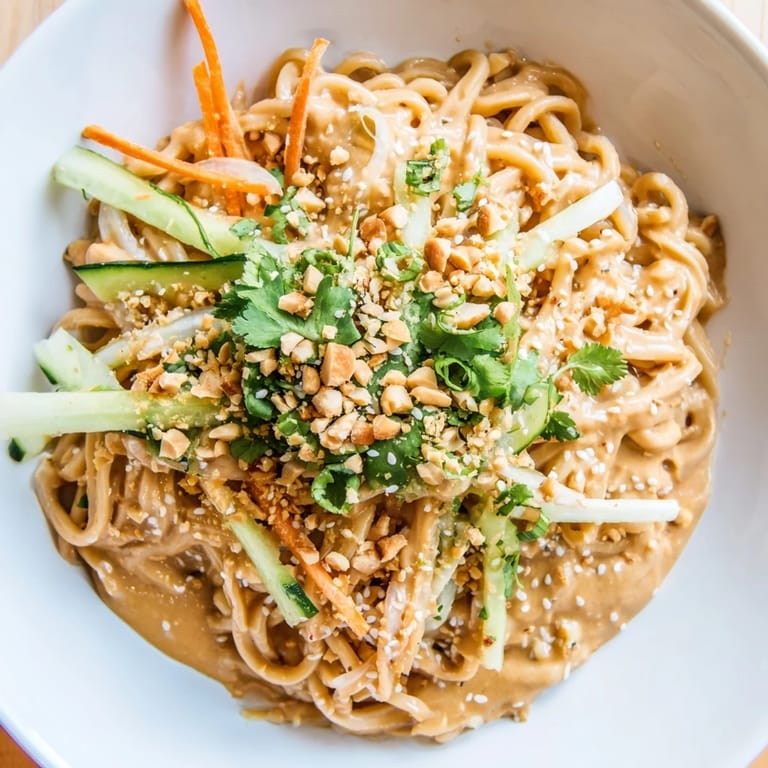
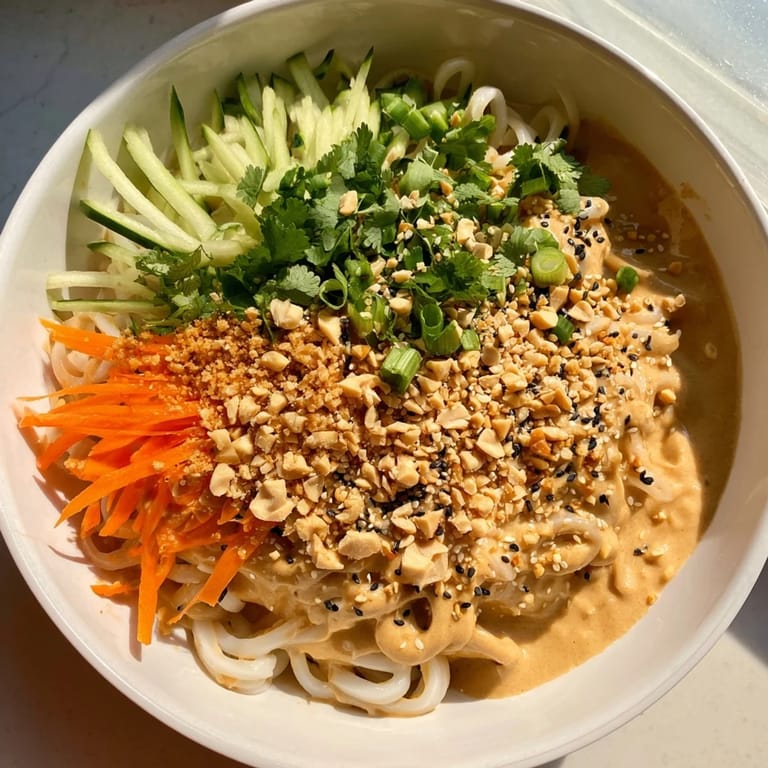
- Cucumber and carrots (julienned): The crunch is what makes these noodles sing—don't skip the fresh vegetables.
- Spring onions, sesame seeds, and cilantro: These are the finishing touches that make people ask for the recipe.
Tired of Takeout? 🥡
Get 10 meals you can make faster than delivery arrives. Seriously.
One email. No spam. Unsubscribe anytime.
Instructions
- Bring water to a boil and cook noodles:
- Follow the package instructions but aim for just barely tender—you want them to have a slight spring when you bite, not mushy. Drain them in a colander and run cold water over them while stirring gently until they're completely cool, then toss with sesame oil so they don't clump together as they chill.
- Whisk the sauce until silky:
- Combine tahini, peanut butter, soy sauce, rice vinegar, honey, toasted sesame oil, garlic, and ginger in a bowl, then whisk gently in a circular motion—this helps incorporate air and makes the sauce smoother. Add cold water one tablespoon at a time until you reach that pourable-but-creamy consistency, like melted vanilla ice cream.
- Toss noodles with sauce:
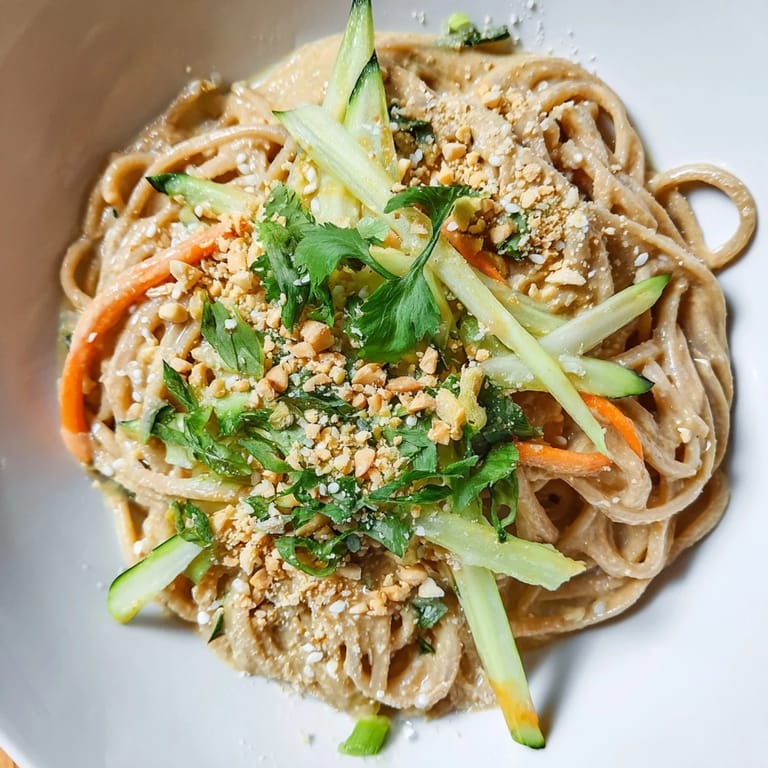
- Put cooled noodles in your largest bowl and pour the sauce over them, then toss using two forks or spoons with a gentle lifting motion so you coat everything without breaking the noodles. The sauce should cling to each strand like it was made for that noodle specifically.
- Build your bowls with intention:
- Divide noodles among serving bowls, then add vegetables and toppings in little piles so each spoonful has a mix of textures and colors. Don't be shy with the cilantro and sesame seeds—they're not just pretty, they're essential flavor anchors.
- Let it chill and meld:
- If you have 10–15 minutes before eating, pop the bowls in the fridge so the flavors have time to get to know each other. If you're hungry now, serve immediately—either way, finish with a squeeze of fresh lime.
 Save to Pinterest
 What strikes me most about this dish is how it's become a quiet anchor in my summer kitchen—the kind of meal that requires no decisions once you've made it once, yet tastes different every time depending on what vegetables are at their peak. It reminds me that sometimes the most nourishing food is the simplest, and that a good sauce can transform nearly anything into something worth savoring.
The Sesame Paste Question
Early on, I treated tahini and sesame paste as interchangeable and learned quickly that Chinese sesame paste has a deeper, almost toasty intensity that makes the sauce taste more authentic and complex. Tahini is lighter and more delicate, which works fine if that's what you have, but if you ever spot sesame paste at an Asian market, it's worth the small investment for how much more vibrant the final dish becomes.
Make-Ahead Magic
I've taken these noodles to picnics, packed them in containers for work lunches, and even served them straight from the fridge to unexpected guests, and they hold up remarkably well for two or three days. The vegetables stay crisp if you keep them separate from the noodles until just before eating, and the sauce actually deepens in flavor as it sits. This is the kind of dish that rewards a little advance thinking.
Variations and Occasions
I've made these noodles vegetarian for myself, added shredded chicken for my partner, and thrown in chilled tofu cubes for friends with dietary preferences—they're endlessly adaptable without losing their essential identity. Some nights I'll add a soft-boiled egg for extra richness, other times I skip the peanut butter for a more delicate sesame flavor. The skeleton of the recipe stays the same, but the personality shifts based on what the moment calls for.
- Stir in shredded rotisserie chicken or crispy tofu for protein without extra cooking steps.
- Use tamari instead of soy sauce and gluten-free noodles for a gluten-free version that tastes just as complete.
- Squeeze lime juice over the top just before eating for brightness that ties everything together.
 Save to Pinterest
 There's real joy in a dish that asks so little and gives so much—no special equipment, no complicated techniques, just honest ingredients and a few minutes of your time. These noodles have quietly become one of those meals I reach for without thinking, the kind that fills you up and cools you down all at once.
Recipe Questions & Answers
- → What noodles work best for cold sesame noodles?
Wheat noodles or spaghetti hold sauce well and maintain a tender texture after cooling. Gluten-free noodles with tamari also work.
- → How can I make the sesame sauce creamy without dairy?
Using tahini and smooth peanut butter creates a naturally creamy and rich sesame-based sauce, without any dairy.
- → Can I prepare this dish ahead of time?
Yes, chilling the noodles with sauce enhances the flavors. Store covered in the refrigerator for up to a day.
- → What toppings add the best texture contrast?
Crunchy vegetables like julienned cucumbers and carrots, alongside toasted sesame seeds and fresh cilantro, provide a refreshing contrast.
- → How to add heat to the dish?
Incorporating chili oil into the sauce introduces a gentle spicy kick that complements the nuttiness without overpowering.
- → Are there protein options to enrich this dish?
Shredded chicken, tofu, or shrimp can be added for extra protein and to enhance its heartiness.