 Save to Pinterest
 Walking home in late November I spotted a stack of misshapen squashes at the corner market and felt an immediate urge to roast something. The kitchen gets this specific golden light in the late afternoon that makes peeling vegetables feel meditative rather than a chore. This soup came together because I needed a way to use up a stray carrot and half an onion before they softened. The scent of cinnamon hitting the hot pan always signals that the season has truly shifted into something cozy. It is the kind of meal that makes the drafty window in my dining room feel like a charming feature rather than a nuisance.
Last October a sudden rainstorm turned my outdoor dinner plans into an indoor carpet picnic. We sat on cushions with mugs of this velvety orange liquid and let the steam fog up our glasses while the wind howled outside. There is something about the way nutmeg lingers in the back of your throat that makes everyone at the table suddenly relax and exhale. I learned that evening that crusty bread is the only real utensil required for a soup this thick and satisfying. It turned a ruined evening into one of my most cherished and quiet culinary memories.
Ingredients
- 2 lbs Butternut Squash: Pick one that feels heavy for its size to ensure the flesh is dense and full of natural sugars.
- One Yellow Onion: This simple vegetable provides a deep savory note that prevents the soup from being too dessert like.
- Two Garlic Cloves: Keeping them whole during the initial phase allows their sweetness to infuse the oil without any risk of burning.
- One Carrot and One Celery Stalk: These aromatic vegetables are essential for building a complex and well rounded flavor base.
- 4 cups Vegetable Broth: A high quality broth makes all the difference so choose one that you would be happy to sip on its own.
- Cinnamon and Nutmeg: These spices are the secret to that nostalgic autumn flavor that warms you from the inside out.
- Unsalted Butter and Olive Oil: Using a mix of both provides a high smoke point for roasting and a silky finish for the pot.
- Heavy Cream or Coconut Milk: A small splash at the finish balances the earthy vegetables and adds a beautiful visual contrast.
- Toasted Pumpkin Seeds: These provide a necessary crunch that breaks up the velvety texture of the puree.
- Fresh Thyme: The herbal brightness of the leaves cuts through the richness and adds a fresh garden aroma to every bowl.
Tired of Takeout? 🥡
Get 10 meals you can make faster than delivery arrives. Seriously.
One email. No spam. Unsubscribe anytime.
Instructions
- Prepare and Roast:
- Toss the cubed squash with oil and salt before letting it get dark and tender in the oven. This creates a base of deep sweetness and concentrated flavor that defines the dish.
- Saute the Base:
- Cook the onion, carrot, and celery until they are soft and translucent in your favorite heavy pot. This builds the foundational savory flavors that balance the intense sweetness of the roasted squash.
- Combine and Simmer:
- Stir in the roasted squash and broth along with those fragrant spices to let the flavors mingle together. Let it bubble gently for about 15 minutes so the vegetables become very soft and easy to blend.
- Blend to Perfection:
- Use an immersion blender directly in the pot until the soup is completely smooth and thick. Ensure every piece of carrot is pulverized to achieve that professional velvet texture we want.
- Final Touches:
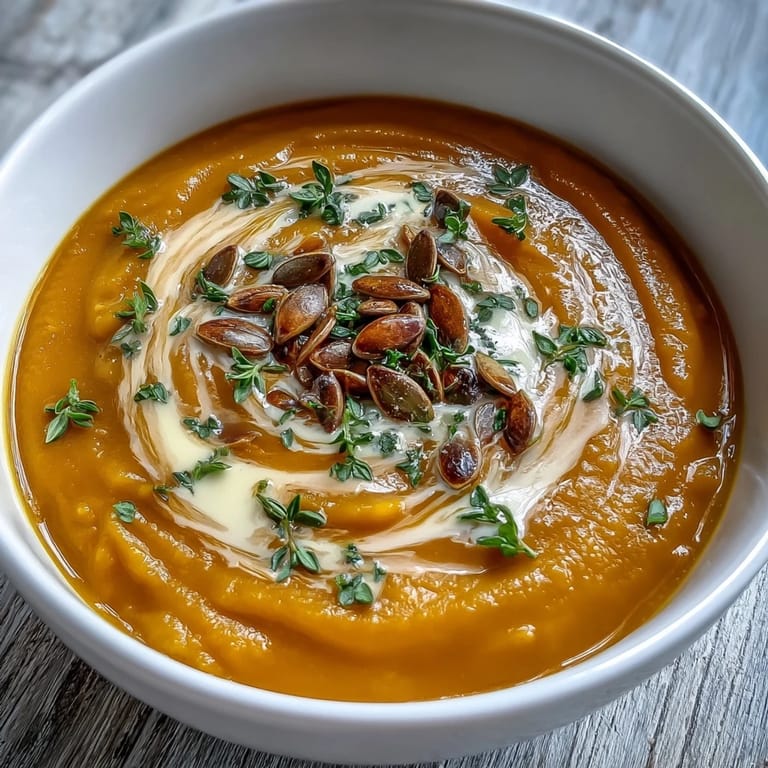
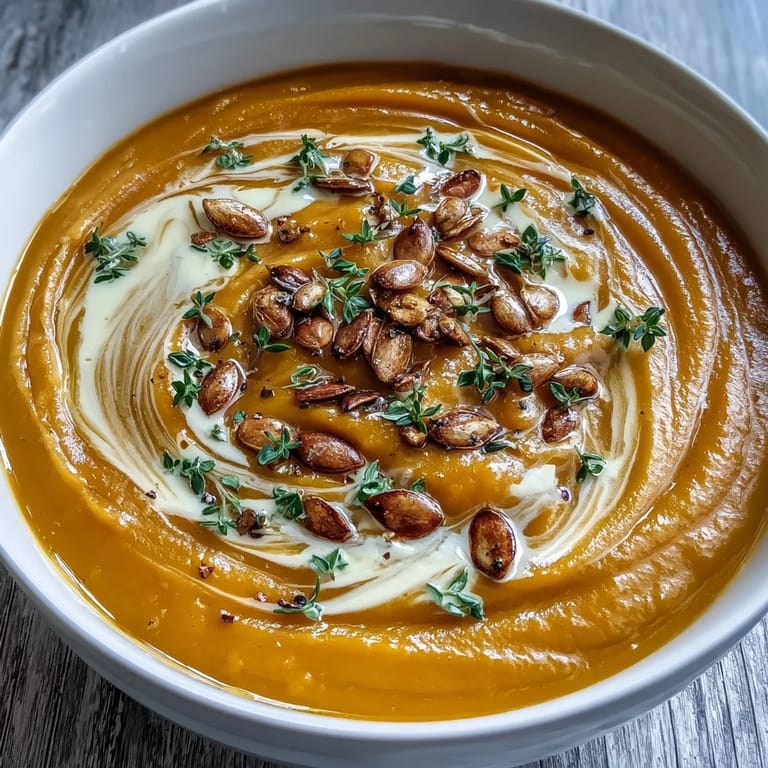
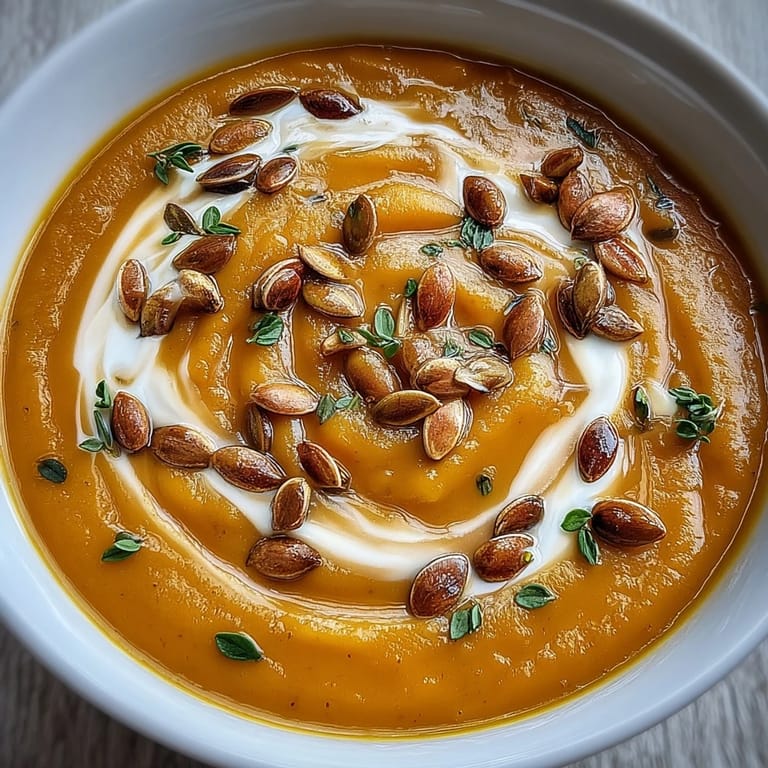
- Ladle the soup into warm bowls and garnish with cream and pumpkin seeds for a bit of textural crunch. It looks beautiful with a fresh sprig of thyme on top to finish the presentation.
 Save to Pinterest
 My neighbor once knocked on the door while the squash was roasting and asked what perfume I was wearing. I laughed and pointed to the oven where the edges of the vegetables were turning to sticky gold. We ended up sharing a pot of this soup while standing at the kitchen island and catching up on life. It is amazing how a simple root vegetable can turn a casual greeting into a deep two hour conversation. Food has a funny way of making people stay a little longer than they originally intended.
The Magic of Texture
If you prefer a more rustic feel you can leave a few chunks of squash unblended for a bit of bite. I usually go for the full velvet experience because it feels more indulgent during the colder months when you want something smooth. Adding a splash of coconut milk instead of dairy cream gives it a tropical undertone that works surprisingly well with the nutmeg.
Serving Suggestions
A thick slice of sourdough toasted with plenty of salty butter is the non negotiable partner for this meal. I sometimes top mine with a few fried sage leaves if I want to feel like a professional chef in my own home. The earthy sage pairs perfectly with the sweetness of the butternut and the heat of the soup.
Making Ahead and Storage
This soup actually tastes better the next day after the spices have had time to fully wake up and integrate. I often make a double batch on Sunday so that Monday lunch is something to actually look forward to during the work week. Keep it in airtight containers and it will stay fresh and delicious for several days in the refrigerator.
- Store the crunchy garnishes separately to keep the pumpkin seeds from getting soggy before serving.
- Reheat slowly on the stove rather than the microwave to preserve the smooth and consistent texture.
- Add a tiny splash of water or extra broth if the soup has thickened too much while sitting in the fridge.
 Save to Pinterest
 This soup is a quiet celebration of the simple joys found in a warm kitchen on a cold night. I hope it brings as much comfort to your table as it always does to mine.
Recipe Questions & Answers
- → Can I make this soup ahead of time?
Absolutely. This soup actually tastes better the next day as flavors have time to meld. Store in an airtight container in the refrigerator for up to 4 days. Reheat gently on the stovetop, adding a splash of broth if needed to adjust consistency.
- → Can I freeze butternut squash soup?
Yes, this soup freezes beautifully. Cool completely before transferring to freezer-safe containers. Leave about an inch of space at the top as liquids expand when frozen. It will keep well for up to 3 months. Thaw overnight in the refrigerator before reheating.
- → Do I need to peel the butternut squash?
Yes, the skin becomes tough when roasted and won't blend smoothly. Use a vegetable peeler or sharp knife to remove the skin before cubing. A 2-pound squash should yield about 3 cups of prepared cubes.
- → What can I use instead of an immersion blender?
A standard countertop blender works perfectly. Blend in batches, filling only halfway and venting the lid to allow steam to escape. You can also use a potato masher for chunkier texture, though the result won't be as smooth.
- → How can I make this soup creamy without dairy?
Full-fat coconut milk creates the same luscious texture with a subtle tropical note. For a neutral flavor, try blending in half a peeled potato or adding a tablespoon of tahini during pureeing.
- → What spices work well in butternut squash soup?
Beyond cinnamon and nutmeg, try adding a pinch of cayenne for warmth, ground ginger for brightness, or curry powder for depth. Fresh sage or rosemary also pairs beautifully with roasted squash flavors.