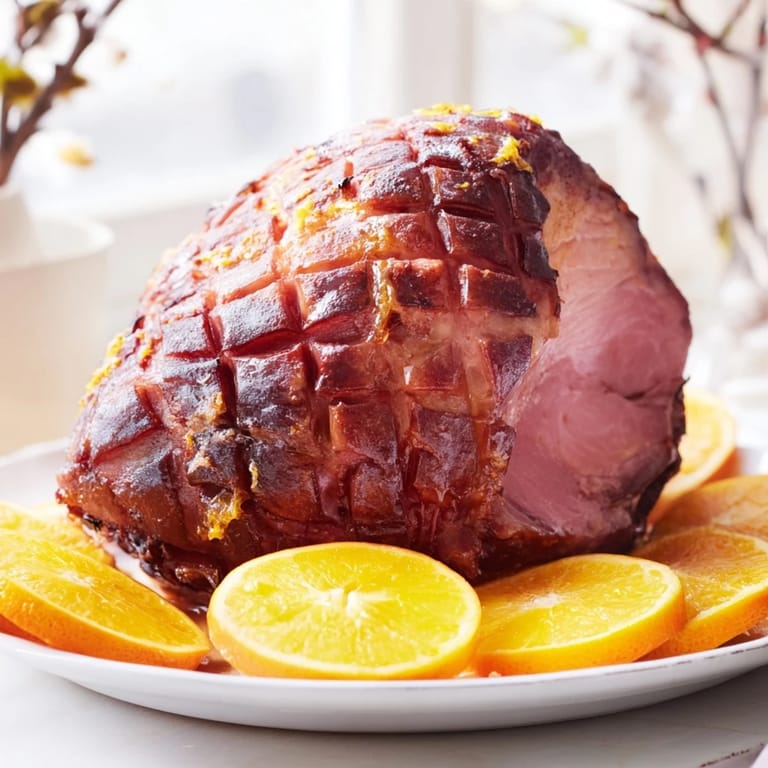
 Save to Pinterest
 The slow cooker was bubbling quietly on the counter when my neighbor knocked, drawn by the scent of honey and cloves drifting through the hallway. I had tucked the ham in that morning, skeptical that something so simple could rival the oven-roasted version my family always made. By evening, the glaze had turned into a sticky, amber coating that clung to every slice, and I learned that patience, not high heat, was the secret all along. That ham disappeared faster than any I'd ever served.
I made this for the first time during a winter potluck where I volunteered to bring the main. The slow cooker sat in the corner of the kitchen, doing all the work while I chatted and set the table. When I lifted the lid, steam rolled out carrying the smell of cinnamon and citrus, and someone actually gasped. It was the kind of moment that made me realize how much a dish can do the hosting for you.
Ingredients
- Fully cooked bone-in ham: The bone adds flavor to the glaze as it cooks, and a pre-cooked ham means you are really just heating and glazing, not worrying about doneness.
- Honey: This is the backbone of the glaze, turning glossy and thick as it reduces, so use a variety you actually like the taste of.
- Brown sugar: It adds molasses depth and helps the glaze cling to the ham instead of sliding off.
- Dijon mustard: The sharpness cuts through all that sweetness and keeps the glaze from feeling one-note.
- Apple cider vinegar: A little acidity brightens everything and balances the sugar, which is crucial after hours of cooking.
- Whole-grain mustard: The seeds add texture and a subtle pop of flavor in every bite of glaze.
- Ground cinnamon and cloves: These warm spices make the kitchen smell like a holiday, even on a random Tuesday.
- Orange slices and whole cloves: They infuse the glaze with citrus and a gentle spiced aroma that lingers on the meat.
Tired of Takeout? 🥡
Get 10 meals you can make faster than delivery arrives. Seriously.
One email. No spam. Unsubscribe anytime.
Instructions
- Prep the ham:
- Set the ham flat side down in your slow cooker and score the surface in a diamond pattern, then press whole cloves into the intersections. This lets the glaze seep into the meat and creates those beautiful caramelized edges.
- Mix the glaze:
- Whisk together honey, brown sugar, both mustards, vinegar, cinnamon, and ground cloves in a bowl until smooth. The mixture will look thin now, but it thickens as it cooks.
- Glaze and add aromatics:
- Pour the glaze evenly over the ham, making sure it pools around the base. Tuck orange slices around the sides where they will steep in the liquid.
- Slow cook:
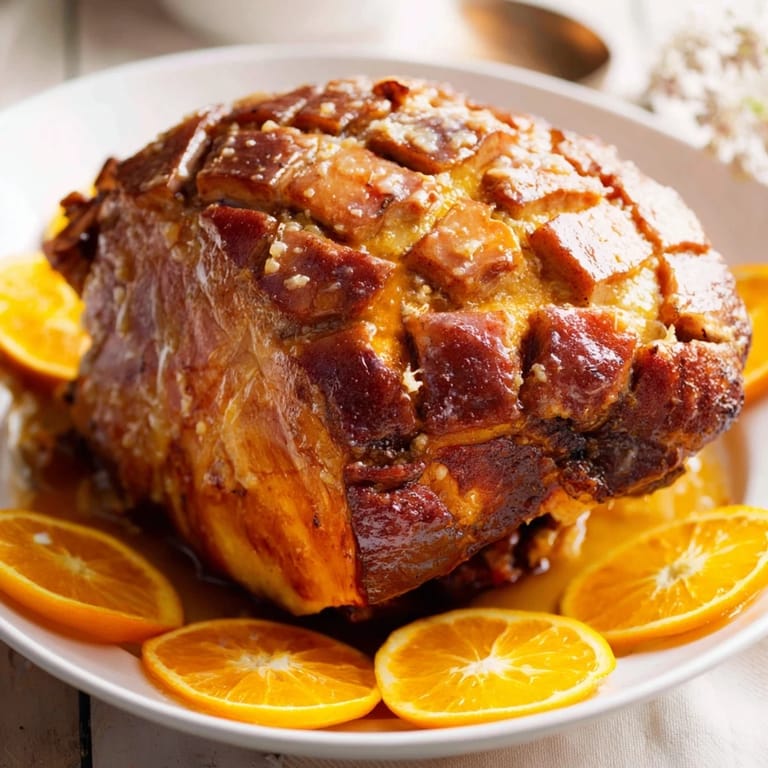
- Cover and set the cooker to low for 6 hours, basting with the pooled glaze every hour or so if you are home. The ham will turn glossy and the glaze will reduce into a sticky coating.
- Rest and reduce:
- Transfer the ham to a cutting board and let it rest while you pour the glaze into a saucepan. Simmer it over medium heat for 5 to 7 minutes until it coats the back of a spoon.
- Slice and serve:
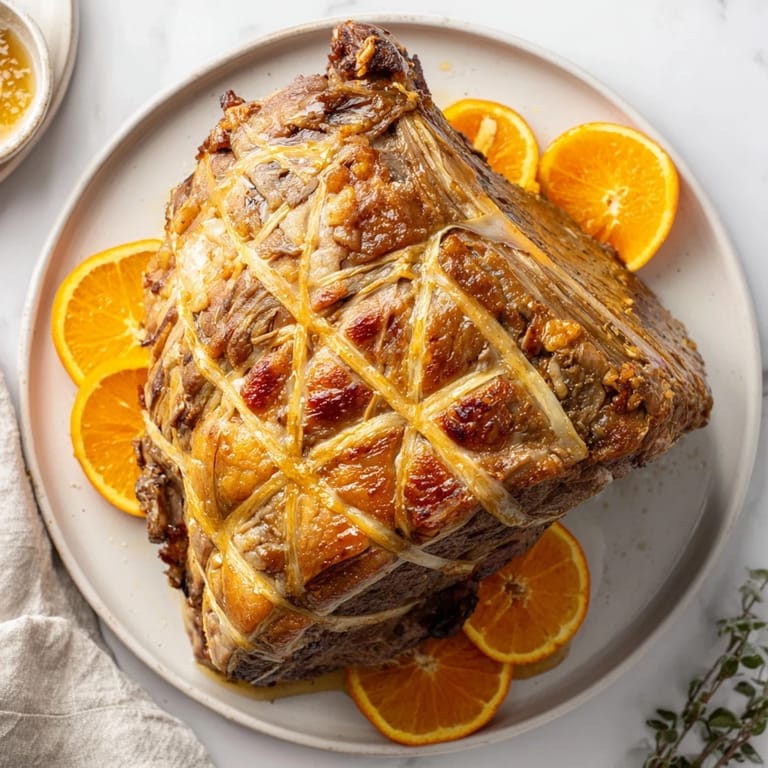
- Carve the ham into thick slices and brush each one with the thickened glaze. Serve warm with any extra glaze on the side.
 Save to Pinterest
 There was a quiet moment after dinner when my cousin looked up from her plate and said she had never tasted ham this tender. It was not just the compliment that stuck with me, but the realization that this recipe had become my new default, the one I would reach for without hesitation whenever I needed to feed a crowd or simply wanted the house to smell like a celebration.
Choosing Your Ham
A bone-in ham is worth it for the flavor it adds to the glaze, but boneless works if that is what you have. Look for one labeled fully cooked so you are not guessing about internal temperatures. I have had the best luck with hams that still have a thin layer of fat on top, which bastes the meat as it heats and keeps everything moist.
Serving and Pairing
This ham shines alongside roasted root vegetables, creamy mashed potatoes, or a simple green salad with a tart vinaigrette. I like to serve it with a crisp white wine like Riesling, which echoes the honey in the glaze without overwhelming the spices. Leftovers are a gift, they make incredible sandwiches on soft rolls with a smear of mustard, or you can dice them into soups and bean dishes for a smoky, sweet depth.
Make It Your Own
If you want a little more complexity, add a splash of bourbon to the glaze before pouring it over the ham. I have also swapped the orange slices for pineapple rings, which lend a tropical sweetness that plays well with the cloves. Some people like to stud the ham with more cloves than the recipe calls for, but I find that a light hand keeps the spice from overpowering everything else.
- Try adding a pinch of cayenne to the glaze if you like a hint of heat cutting through the sweetness.
- If you do not have apple cider vinegar, white wine vinegar or even fresh orange juice works in a pinch.
- For a darker, richer glaze, use dark brown sugar or even a tablespoon of molasses.
 Save to Pinterest
 This ham has become the kind of recipe I make when I want the meal to feel special without spending the whole day in the kitchen. It is proof that the slow cooker can do more than soups and stews, and that sometimes the best dishes are the ones that cook themselves while you do everything else.
Recipe Questions & Answers
- → How do I prepare the ham for slow cooking?
Score the surface in a diamond pattern and stud with whole cloves. This allows flavors to penetrate and adds aromatic depth.
- → What ingredients create the honey glaze?
The glaze combines honey, brown sugar, Dijon and whole-grain mustard, apple cider vinegar, cinnamon, and ground cloves for a sweet and spiced coating.
- → Can I add extra flavor to the glaze?
Yes, adding a splash of bourbon enhances richness and pairs well with the spices.
- → How long should the ham cook?
Cook the ham on low heat for about 6 hours until tender and heated through.
- → What’s the best way to serve leftovers?
Leftover ham works great in sandwiches or added to soups, providing versatility beyond the initial meal.
- → Are there any allergens to note?
This dish contains mustard, which can be an allergen. Gluten-free as written, but check labels on mustard and vinegar for hidden gluten.