 Save to Pinterest
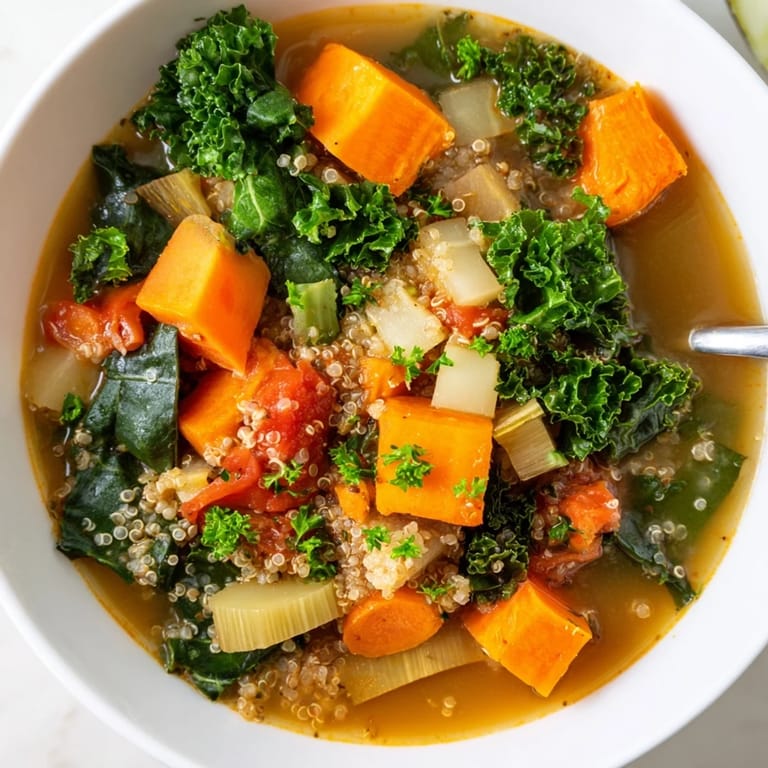
 There was a January morning when my kitchen felt too quiet, and I stood staring at a crisper drawer full of vegetables I wasn't sure would last another week. I'd been reaching for the same recipes on repeat, and something about that felt tired. So I started chopping—carrots, celery, sweet potato—and before I knew it, I was building a soup that felt less like cooking and more like giving myself permission to slow down. That bowl, steaming and golden with quinoa, taught me that the best meals sometimes arrive when you stop overthinking and start with what's actually in front of you.
I made this soup for my neighbor one snowy afternoon when she'd just moved in and looked overwhelmed by unpacked boxes. Watching her face soften at the first spoonful reminded me that nourishing someone with food is sometimes the most honest conversation you can have. She's made it three times since, and now it's become the thing she brings to her own gatherings.
Ingredients
- Olive oil: Just a tablespoon—enough to coax out the sweetness of the onions and garlic without making the broth heavy.
- Onion and garlic: These two are the foundation; don't skip the sautéing step because it transforms them from raw to aromatic and sweet.
- Carrots, celery, and parsnip: The holy trinity with a softer cousin—together they build layers of flavor that feel almost savory without any meat.
- Sweet potato: This is the secret ingredient that people taste but can't quite name; it adds natural sweetness and body.
- Kale or Swiss chard: Remove those tough stems (seriously, take five seconds to do it), and you'll have tender greens that don't turn to sludge.
- Cabbage: It keeps its shape and adds a gentle earthiness that balances the sweetness from the potato.
- Tomatoes: Canned works beautifully because the tomatoes are already soft, and they add subtle acidity that brightens everything.
- Quinoa: Rinsed thoroughly—this small step removes the bitter coating and lets the grain's natural nuttiness shine through.
- Vegetable broth: Low-sodium gives you room to season intentionally; it also keeps the soup feeling delicate rather than salty.
- Thyme and oregano: Dried herbs work wonderfully here; they infuse slowly into the broth and become part of the flavor rather than an afterthought.
- Lemon juice: Optional, but it's the final note that makes people say the soup tastes like restaurant food.
Tired of Takeout? 🥡
Get 10 meals you can make faster than delivery arrives. Seriously.
One email. No spam. Unsubscribe anytime.
Instructions
- Build your base:
- Pour the olive oil into a large pot and let it warm for about thirty seconds—you'll feel the shift when it's ready. Add your diced onion and minced garlic, stirring until the kitchen fills with that smell that signals something good is starting. After two or three minutes, the onion will turn translucent and the garlic will lose its sharpness.
- Add your foundation vegetables:
- Now add the carrots, celery, parsnip, and sweet potato. Stir them into the warm oil and let them sit for five or six minutes, giving them a stir every couple of minutes—you're coaxing out their natural sugars and creating depth before the broth even touches the pot.
- Introduce the greens and tomatoes:
- Fold in your chopped kale or chard and cabbage, then add the tomatoes. You only need another two minutes here; the greens will begin to wilt at the edges, and the tomatoes will start breaking down into the oil, creating a fragrant base.
- Bring it all together:
- Add your rinsed quinoa, vegetable broth, thyme, oregano, bay leaf, salt, and pepper. Give everything a good stir to distribute the seasonings evenly, then turn up the heat until you see bubbles breaking across the surface—that's your signal to lower the heat to low, place the lid on, and let time do the work.
- The long simmer:
- For twenty-five to thirty minutes, the kitchen will smell like comfort. You're waiting for the vegetables to turn tender (a fork should slide through the sweet potato easily) and the quinoa to turn translucent with a tiny white ring visible around each grain. Resist the urge to peek constantly—let the steam do its job.
- The finishing touches:
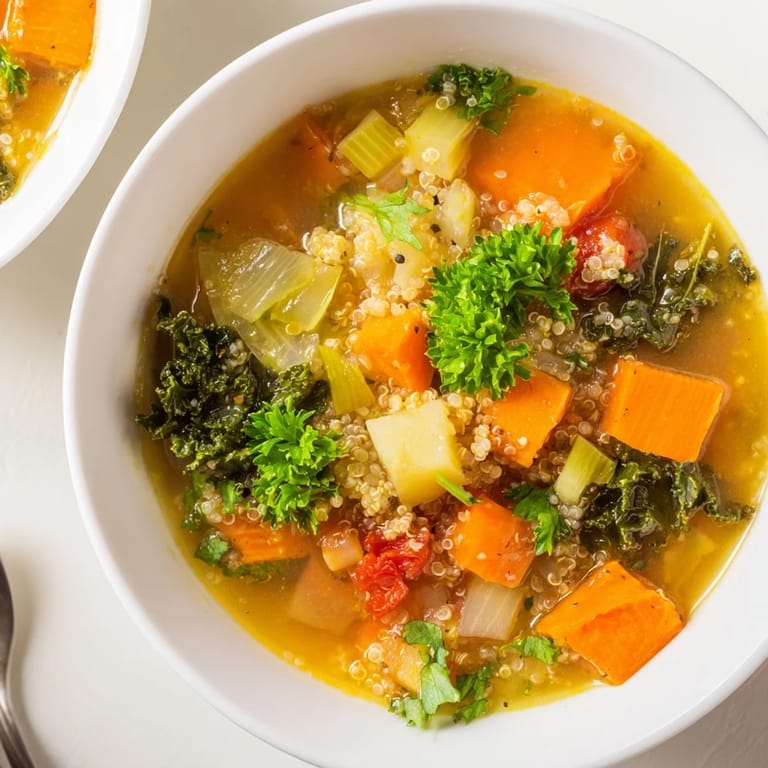
- Remove the bay leaf, which has surrendered all its flavor to the broth. Stir in fresh parsley and a squeeze of lemon juice if you have it. Taste a spoonful and adjust the salt and pepper—this is your moment to season with intention, knowing exactly what's in each bowl.
 Save to Pinterest
 This soup has a way of turning ordinary weeknight dinners into something worth sitting down for. It's become the thing I make when I need to feed someone or feed myself—and I honestly can't think of a reason to make it differently.
Why This Soup Feels Different
Most vegetable soups rely on cream or stock made from bones to feel substantial, but this one builds its heartiness from vegetables that are allowed to be themselves. The sweet potato adds a gentle sweetness, the quinoa provides protein and texture, and the broth becomes something richer than water through slow simmering. There's an honesty in it—you're not tricking your palate or pretending this is something it's not, which somehow makes it more satisfying.
Customizing Without Losing the Soul
The beauty of this soup is that it invites improvisation. If your crisper has different vegetables than mine did, use them; the cooking times might shift slightly, but the method stays the same. Zucchini will contribute different texture, parsnips can be replaced with turnips, and leafy greens are almost completely interchangeable. The only non-negotiable element is the slow simmering—that's where the magic actually happens, not in following an ingredient list exactly.
Making It Heartier and Serving Suggestions
On colder evenings, I've added a can of drained chickpeas or white beans during the final simmer, which turns this from a side into something substantial enough for a full meal. A slice of crusty whole-grain bread alongside it becomes almost ceremonial—the way you can soak up the last of the broth and feel like you've eaten something intentional. For anyone who likes heat, a pinch of red pepper flakes stirred in at the very end adds a gentle warmth that doesn't overpower the vegetables.
- Add beans or chickpeas in the last five minutes if you want extra protein without changing the cooking time.
- Serve with bread that's still warm, and you've turned a simple soup into something people remember.
- Store leftovers in the refrigerator for up to four days, and the flavors only deepen as the broth settles.
 Save to Pinterest
 This is the kind of soup that teaches you something quiet about cooking—that the best meals often come from working with what you have rather than chasing what you don't. Make it once, and you'll find yourself making it again.
Recipe Questions & Answers
- → What vegetables are used in this dish?
The dish features carrots, celery, parsnip, sweet potato, kale or Swiss chard, cabbage, and diced tomatoes.
- → How is the quinoa prepared in the soup?
Quinoa is rinsed thoroughly before being added to the simmering broth to cook alongside the vegetables, absorbing the flavors.
- → Can I adjust the seasoning for more flavor?
Yes, the seasoning can be adjusted with salt, pepper, fresh parsley, and optional lemon juice to enhance brightness and depth.
- → What is the cooking time for this meal?
After sautéing the vegetables, the soup simmers for about 25 to 30 minutes until vegetables are tender and quinoa is fully cooked.
- → Are there suggestions for adding protein?
For added protein, chickpeas or white beans can be incorporated without altering the core flavors.