 Save to Pinterest
 My grandmother used to say that black-eyed peas on New Year's Day weren't just tradition—they were insurance. She'd simmer a massive pot in her kitchen while the smell of smoky sausage and bay leaves filled every corner of her house, and somehow it felt like we were cooking luck itself into those little beans. Years later, I realized what she was really teaching me: that comfort food works best when you give it time, when you layer flavors thoughtfully, and when you understand that some dishes are meant to be shared, not rushed.
I made this for the first time at a friend's New Year's Eve dinner, and I was nervous because I'd never cooked for that many people before. But watching everyone's faces when they tasted it—the quiet moment of recognition, like they were tasting something from their own childhoods—that's when I stopped worrying and just enjoyed the moment. Turns out, good food doesn't need perfection; it just needs intention.
Ingredients
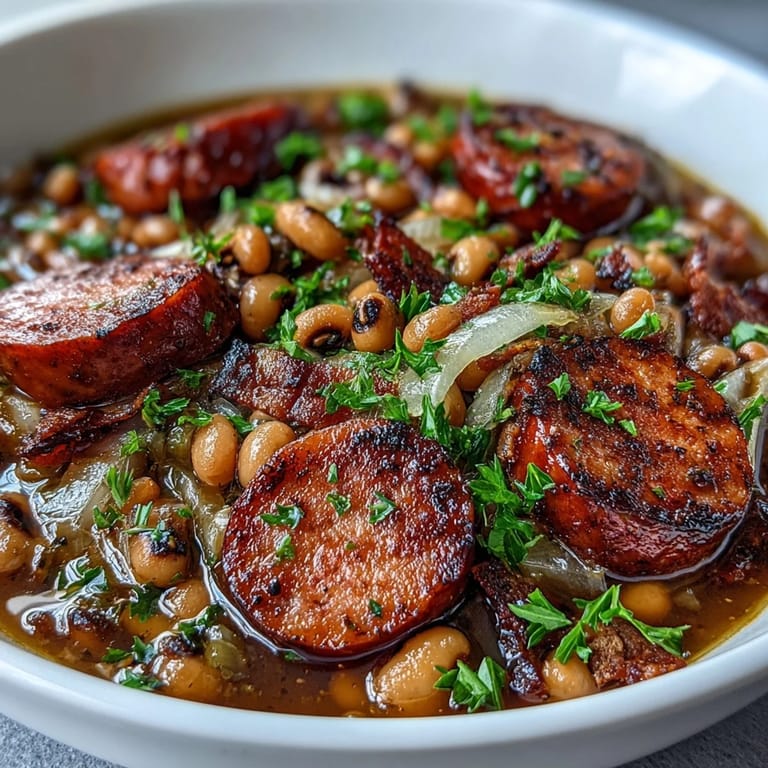
- Smoked sausage (Andouille or Kielbasa), 225 g: This is where most of the flavor comes from, so don't skimp here—look for real smoked varieties, and slice them on a slight bias so they brown better in the pot.
- Thick-cut bacon, 115 g: The rendered fat becomes your cooking base and flavors everything else; thin bacon will crisp too fast and turn bitter.
- Dried black-eyed peas, 450 g: Soak them overnight if you can—it cuts cooking time in half and makes them digest more easily, but a quick-soak works when you're short on time.
- Onion, green bell pepper, and celery: This trio (called the holy trinity in Creole cooking) forms the flavor foundation; dice them evenly so they cook at the same rate.
- Garlic, 3 cloves: Mince it fresh—jarred garlic tastes tinny and will make the whole pot taste off.
- Low-sodium chicken broth, 1.5 liters: Low-sodium lets you control the salt level as the peas absorb liquid and the flavors concentrate.
- Smoked paprika and thyme: The paprika gives that campfire depth without actual smoke; thyme adds earthiness that makes everything taste intentional.
- Cayenne pepper, optional: Start with a quarter teaspoon if you want heat—you can always add more, but you can't take it back.
- Bay leaves, 2: Remove them before serving or you'll hear about it from someone at the table.
Tired of Takeout? 🥡
Get 10 meals you can make faster than delivery arrives. Seriously.
One email. No spam. Unsubscribe anytime.
Instructions
- Prepare your peas the night before (or use the quick method):
- If you have time, soak them overnight in plenty of water—they'll plump up and cook faster. If you're short on time, pour boiling water over them, let them sit for an hour, then drain and rinse. Either way, this step matters because it removes compounds that cause digestive discomfort and helps them cook evenly.
- Render the bacon until it shatters:
- In your Dutch oven over medium heat, cook the bacon slowly so it releases all its fat and becomes crispy, not chewy—about 8 minutes. The rendered fat is liquid gold for cooking; don't drain it yet.
- Brown the sausage in that bacon fat:
- Add the sliced sausage to the pot and let it develop a caramelized crust on both sides, about 5 minutes total. You're not trying to cook it through; you're building flavor through browning.
- Build the flavor base with vegetables:
- Add the onion, pepper, and celery to the same pot and let them soften in all that flavorful fat, stirring occasionally, about 5-6 minutes. When they're translucent and smell sweet, add the garlic and cook for just one more minute—any longer and garlic turns bitter.
- Combine everything and simmer gently:
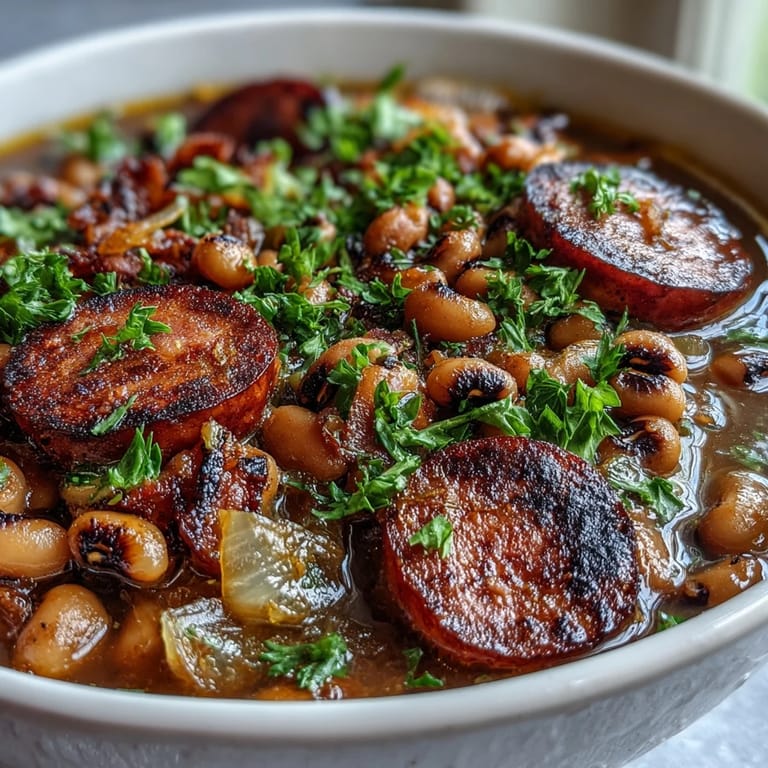
- Stir in your drained peas, broth, water, bay leaves, paprika, thyme, cayenne if you're using it, black pepper, and salt. Return the bacon and sausage to the pot, bring it all to a boil, then reduce heat to low and cover. Let it simmer undisturbed for 1 to 1.5 hours—the peas should be tender but not falling apart, and the broth should taste rich and savory.
- Taste and adjust before serving:
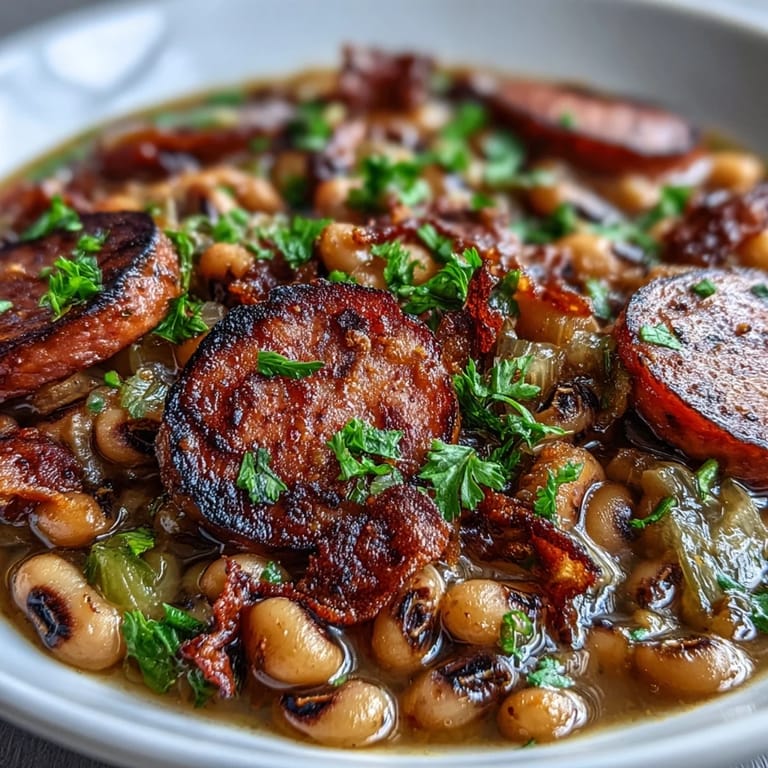
- Remove those bay leaves, then taste a spoonful of broth with a pea and adjust salt if needed. Finish with fresh parsley, which adds brightness and color.
 Save to Pinterest
 There's a moment near the end of cooking when you lift the lid and the steam rises up and everything smells like home, like tradition, like someone cared enough to spend time on a meal. That's the moment you know it's going to be good.
The Story Behind This Dish
Black-eyed peas on New Year's Day is more than just a Southern superstition—it's a way of saying you're starting fresh, hoping for good fortune, and inviting people to the table. Enslaved West Africans brought the knowledge of growing and cooking peas to the American South, and it became a cornerstone of Southern cooking alongside collard greens and cornbread. Every time you make this, you're part of a long conversation about survival, flavor, and family.
What to Serve Alongside
Cornbread is non-negotiable—the slightly sweet, crumbly texture contrasts perfectly with the savory, brothy peas. A side of sautéed collard greens with garlic adds earthiness and color, and steamed white rice underneath the peas is traditional and practical (it soaks up all that flavorful broth). If you want something cold to balance the warmth, a simple green salad or crisp iced tea works beautifully.
Making It Your Own
This recipe is flexible because Southern cooking is flexible—it's built on what you have on hand and what tastes good. Some families add diced tomatoes in the last 20 minutes for brightness, others stir in a handful of collard greens or mustard greens to make it more of a one-pot meal. You can make it vegetarian by using vegetable broth and adding liquid smoke or extra smoked paprika to keep that depth.
- Try adding a small diced jalapeño with the garlic if you want heat that's fresher than cayenne.
- A splash of apple cider vinegar or hot sauce at the table lets everyone adjust the acidity and spice to their taste.
- Leftover peas taste even better the next day when flavors have merged—reheat gently with a splash of water.
 Save to Pinterest
 There's something about a pot of black-eyed peas that makes people slow down and actually taste their food. Make this for someone you care about, and you'll understand why it's been cooked the same way for generations.
Recipe Questions & Answers
- → Do I need to soak black-eyed peas before cooking?
Yes, soak dried black-eyed peas overnight in plenty of water. For a faster method, cover them with boiling water and let stand for 1 hour. Drain and rinse before adding to the pot. This ensures even, tender cooking.
- → Can I make this vegetarian?
Absolutely. Omit the bacon and sausage, then use vegetable broth instead of chicken broth. Add extra smoked paprika or a few drops of liquid smoke to maintain that depth of flavor.
- → What should I serve with black-eyed peas?
Traditionally served over steamed white rice to soak up the flavorful broth. Cornbread is essential for soaking up every drop. Sautéed collard greens or mustard greens make perfect sides. Iced sweet tea or a crisp white wine complements the meal beautifully.
- → How long will leftovers keep?
Store in an airtight container in the refrigerator for up to 4 days. The flavors actually improve overnight as the peas absorb more seasoning. Reheat gently on the stovetop, adding a splash of water or broth if needed.
- → Why are black-eyed peas eaten on New Year's?
Southern tradition holds that eating black-eyed peas on New Year's Day brings prosperity and good luck for the coming year. The peas represent coins, and when served with collard greens (representing paper money) and cornbread (representing gold), it's a full plate of fortune.
- → Can I use canned black-eyed peas instead?
You can substitute canned peas, but the texture will be softer and less creamy. Use about 3-4 cans (drained and rinsed) and reduce the cooking time to 30-40 minutes. Dried peas develop a richer flavor and better texture in this slow-simmered dish.